

How to Find an Employment Lawyer for Wrongful Termination, Workplace Policies, and Compliance
Navigating wrongful termination, evolving workplace policies, and regulatory compliance can feel overwhelming for both employees and employers. Whether you suspect an unlawful dismissal, need help drafting compliant employee handbooks, or face an EEOC charge, having the right employment lawyer is critical. In FY 2025, the EEOC secured $660 million for workers who reported employment discrimination, and discharge or constructive discharge topped the list of issues litigated. This guide explains what employment lawyers handle, when you need one, and how BridgehouseLaw can help protect your rights and your business.
What Is Employment Law?
Employment law is the body of federal, state, and local regulations governing the relationship between employers and employees. It covers hiring practices, wages, discrimination, workplace safety, termination procedures, and benefits administration. For businesses operating across state lines or internationally, employment law also intersects with immigration requirements and cross-border labor standards.
An employment lawyer is an attorney who advises employers or employees on rights, obligations, and disputes arising under these regulations. Whether you run a startup entering the U.S. market or you are an individual facing a workplace dispute, an employment lawyer helps you understand your options and minimize legal risk.
Understanding Wrongful Termination
Wrongful termination is a dismissal that violates federal or state law, public policy, or the terms of an employment contract. Most U.S. states, including North Carolina, follow the at-will employment doctrine, which allows either party to end the relationship at any time. However, there are important exceptions.
Common Grounds for Wrongful Termination Claims
Employees may have a valid claim if they were fired based on a protected characteristic such as race, age, sex, disability, religion, or national origin. Retaliation for filing a discrimination complaint or whistleblowing also qualifies. According to EEOC data, discharge or constructive discharge was the most commonly asserted issue in FY 2025 litigation, with 64 cases filed by the agency alone.
Filing Deadlines You Cannot Miss
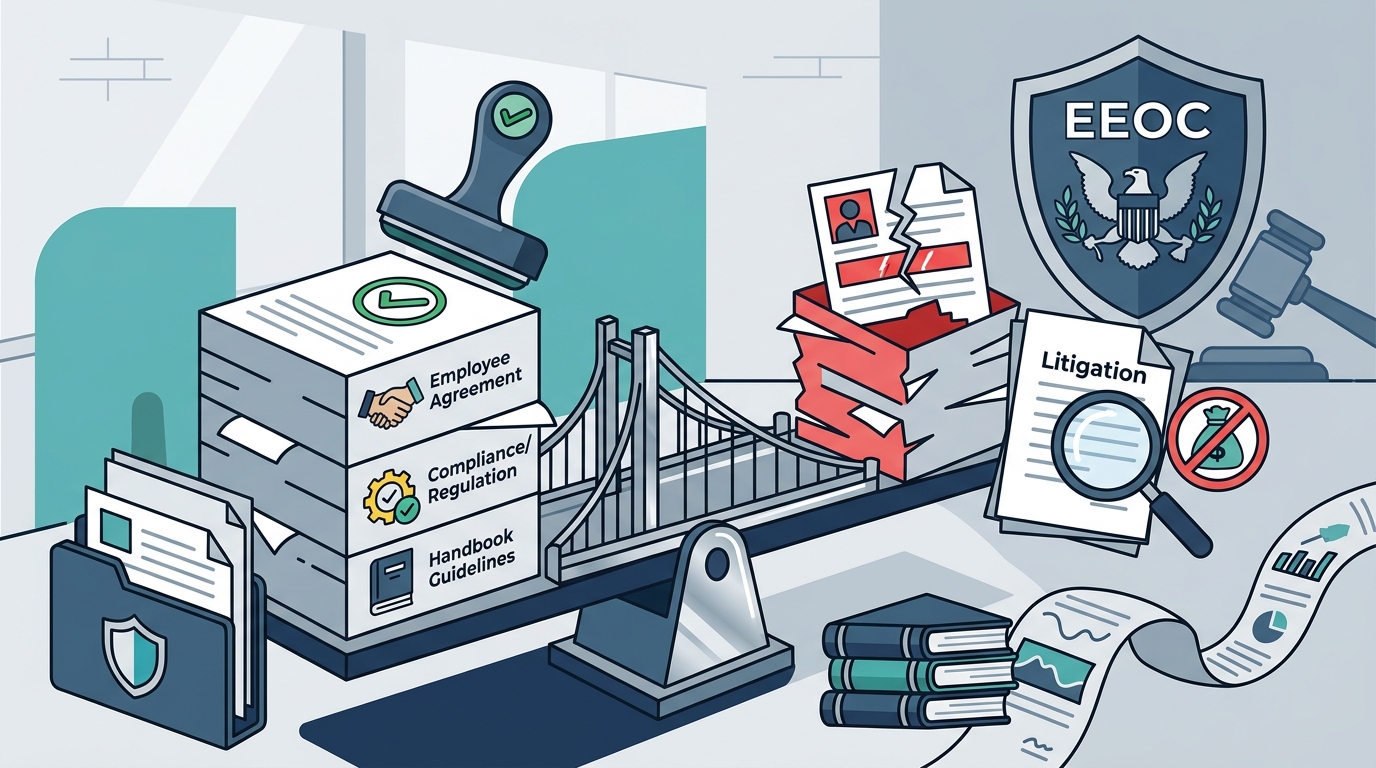
For federal discrimination claims under Title VII, the ADA, or the ADEA, workers typically must file an EEOC charge within 180 days of the discriminatory action. That deadline extends to 300 days in states with their own anti-discrimination enforcement agency. Missing these windows generally means losing the right to pursue legal action.
Workplace Policies and Employee Handbooks
Well-drafted workplace policies are the foundation of legal compliance and a healthy work environment. An employee handbook is a document that outlines company rules, benefits, disciplinary procedures, and legal disclosures for staff members. It sets expectations and reduces litigation risk.
BridgehouseLaw's Employment Law Attorneys help businesses draft compliant employee handbooks and policies, including training materials, anti-discrimination policies, and leave procedures. Services also cover ensuring compliance with laws like the FLSA, FMLA, and state labor regulations, and updating policies to reflect regulatory changes.
Why Handbooks Matter for International Companies
Foreign companies expanding into the U.S. often underestimate the complexity of American employment regulations. BridgehouseLaw's Charlotte office specializes in U.S. subsidiary formation, which includes drafting employment offers, employee contracts, and HR policy documents as part of the market-entry process.
Employment Compliance: Key Federal and State Laws
Compliance is the ongoing process of ensuring your business operations meet all applicable legal requirements. Below is a comparison of the major federal employment laws that affect most businesses.
| Law | Applies To | Key Requirement |
|---|---|---|
| Title VII (Civil Rights Act) | Employers with 15+ employees | Prohibits discrimination based on race, color, religion, sex, or national origin |
| Americans with Disabilities Act (ADA) | Employers with 15+ employees | Requires reasonable accommodation for qualified individuals with disabilities |
| Fair Labor Standards Act (FLSA) | Most private and public employers | Sets minimum wage, overtime pay, and recordkeeping standards |
| Family and Medical Leave Act (FMLA) | Employers with 50+ employees | Provides up to 12 weeks unpaid, job-protected leave per year |
| Age Discrimination in Employment Act (ADEA) | Employers with 20+ employees | Prohibits age-based discrimination against workers 40 and older |
North Carolina adds its own requirements. The state follows at-will employment but recognizes exceptions for violations of public policy, and employers must comply with the FLSA's wage and hour provisions alongside state-specific regulations.
When to Hire an Employment Lawyer
Not every workplace disagreement requires legal counsel, but certain situations demand professional guidance. You should consult an employment lawyer when:
- You receive an EEOC charge or a demand letter from a former employee.
- You plan to terminate an employee and want to minimize legal exposure.
- You need to draft or update an employee handbook or workplace policies.
- Your company is expanding into the U.S. and must comply with unfamiliar labor laws.
- You believe you have been wrongfully terminated or faced retaliation.
Acting quickly matters. Statutes of limitations are strict, and evidence can deteriorate over time. BridgehouseLaw provides employment law services covering contracts, wrongful termination claims, discrimination defense, and wage compliance.
What to Look for in an Employment Law Firm
Choosing the right firm means evaluating experience, geographic reach, and specialization. Look for attorneys who handle both employer-side and employee-side matters, because that dual perspective strengthens legal strategy.
Key Selection Criteria
- Relevant jurisdiction: Your lawyer should be licensed in the state where the dispute arises.
- Industry experience: International businesses need counsel familiar with cross-border employment issues, immigration, and multi-jurisdictional compliance.
- Track record: Ask about prior wrongful termination, EEOC defense, or compliance audit experience.
- Accessibility: Choose a firm that offers consultations and clear communication throughout the process.
How BridgehouseLaw Supports Employers and Employees
BridgehouseLaw LLP provides expert employment law services, helping businesses navigate contracts, compliance, wrongful termination claims, and workplace policies. The firm's Charlotte office serves as the hub for U.S. legal services, with attorneys who specialize in hiring and firing guidance, discrimination defense, and wage compliance.
For international companies entering the American market, BridgehouseLaw offers an integrated approach that combines Foreign Direct Investment legal support with employment compliance, immigration services, and corporate structuring. Attorney Crystal McBride, for example, specializes in both domestic and international human resources law, bringing SPHR and GPHR certifications alongside her legal expertise.
BridgehouseLaw serves clients from offices in Atlanta, Charlotte, Berlin, Cologne, Guatemala City, Sao Paulo, and Vancouver, making it a strong choice for businesses with cross-border workforce needs.
Key Takeaways
- Wrongful termination occurs when a firing violates federal or state law, public policy, or an employment contract.
- The EEOC secured $660 million for discrimination victims in FY 2025, with discharge topping the list of litigated issues.
- EEOC charge deadlines range from 180 to 300 days depending on your state, so acting quickly is essential.
- A well-drafted employee handbook reduces litigation risk and clarifies expectations for both employers and employees.
- Compliance with the FLSA, FMLA, Title VII, ADA, and ADEA is required for most U.S. employers.
- International companies entering the U.S. need employment counsel familiar with both labor law and immigration requirements.
- BridgehouseLaw provides integrated employment law, corporate, and immigration legal services from seven global offices.
Frequently Asked Questions
What is wrongful termination?
Wrongful termination is when an employer fires someone for a reason that violates federal or state law, public policy, or the terms of an employment contract. Examples include discrimination-based firings and retaliation against whistleblowers.
How long do I have to file a wrongful termination claim?
For federal discrimination claims, you generally must file an EEOC charge within 180 days of the termination. This extends to 300 days in states with local anti-discrimination agencies. State-law claims may have different deadlines.
What does an employment lawyer cost?
Costs vary depending on the complexity of the case, the attorney's experience, and the billing structure. Some employment lawyers work on contingency for employee-side cases, while employer-side work is typically billed hourly. BridgehouseLaw offers initial consultations to discuss your matter and fees.
Can an at-will employee sue for wrongful termination?
Yes. While at-will employment allows termination for most reasons, it does not allow firings based on protected characteristics, retaliation, or violations of public policy. An experienced employment lawyer can evaluate whether your dismissal falls into a legal exception.
What should be included in an employee handbook?
A compliant employee handbook should cover anti-discrimination and harassment policies, leave policies (FMLA, state-specific), wage and hour guidelines, disciplinary procedures, at-will employment disclaimers, and safety protocols. BridgehouseLaw drafts and reviews handbooks tailored to each business.
Does BridgehouseLaw handle employment law for international companies?
Yes. BridgehouseLaw specializes in helping foreign companies, particularly from Germany and Europe, establish compliant U.S. operations. Services include drafting employment contracts, setting up HR policies, and navigating immigration requirements alongside employment law compliance.
What is the EEOC and what does it do?
The Equal Employment Opportunity Commission (EEOC) is the primary federal agency that enforces anti-discrimination laws in the workplace. It investigates charges of discrimination, attempts conciliation, and can file lawsuits on behalf of workers.
Where does BridgehouseLaw offer employment law services?
BridgehouseLaw provides employment law services primarily through its Charlotte, North Carolina office, serving clients in NC, SC, PA, and D.C. The firm also offers employment-related counsel through its international offices in Berlin, Cologne, Vancouver, and other locations.
Schedule a Consultation with BridgehouseLaw
Whether you are an employer building compliant workplace policies or an employee facing wrongful termination, BridgehouseLaw's experienced attorneys are ready to help. Contact BridgehouseLaw today to schedule a consultation and take the first step toward protecting your rights and your business.