

How to Find an Immigration Lawyer for Work Visas and Company Sponsorship
Navigating the U.S. immigration system as an employer or a foreign professional can feel overwhelming. Between lottery registrations, labor condition applications, and strict filing deadlines, the stakes are high and the margin for error is slim. Whether you need an H-1B, L-1, or E-2 visa, working with an experienced immigration law attorney dramatically improves your chances of a smooth, compliant process. This guide explains what to look for in an immigration lawyer, outlines the most common work visa categories, and shows how company sponsorship actually works.
What Is an Immigration Lawyer?
An immigration lawyer is a licensed attorney who specializes in advising individuals and businesses on visa applications, compliance, and residency processes under U.S. immigration law. These attorneys interpret the Immigration and Nationality Act (INA) and guide clients through filings with U.S. Citizenship and Immigration Services (USCIS).
Business immigration lawyers focus specifically on employer-sponsored visas. They handle labor condition applications, petition filings, and compliance audits so companies can legally bring foreign talent into the United States.
Why You Need an Immigration Lawyer for Work Visas
Work visa petitions involve detailed documentation, strict deadlines, and evolving regulations. A single error on Form I-129 can result in a Request for Evidence (RFE) or an outright denial. In FY 2025, USCIS adjudicated over 415,000 H-1B petitions alone, approving 97.9% of them. While that approval rate sounds high, the thousands of denials represent real consequences for employers and workers.
An experienced attorney ensures your petition meets specialty occupation standards, wage-level requirements, and employer-employee relationship criteria. At BridgehouseLaw, our immigration law attorneys work alongside our corporate law team to provide end-to-end support for international businesses entering the U.S. market.
Common U.S. Work Visa Categories
Understanding which visa fits your situation is the first step. Below is a comparison of the most frequently used employment-based visa types.
| Visa Type | Purpose | Duration | Employer Sponsorship Required? |
|---|---|---|---|
| H-1B | Specialty occupation roles requiring a bachelor's degree or higher | 3 years (extendable to 6) | Yes |
| L-1A | Intracompany transfer for managers/executives | Up to 7 years | Yes |
| L-1B | Intracompany transfer for specialized knowledge employees | Up to 5 years | Yes |
| E-2 | Treaty investor visa for nationals of treaty countries | 2 years (renewable) | Investment-based |
| O-1 | Individuals with extraordinary ability or achievement | Up to 3 years | Yes (or agent) |
A work visa is a temporary authorization that allows a foreign national to be employed in the United States under specific conditions set by USCIS. Each category carries its own eligibility criteria, so choosing the right one matters. Our corporate law attorneys regularly advise international companies on which visa pathway aligns with their expansion plans.
How Company Sponsorship Works
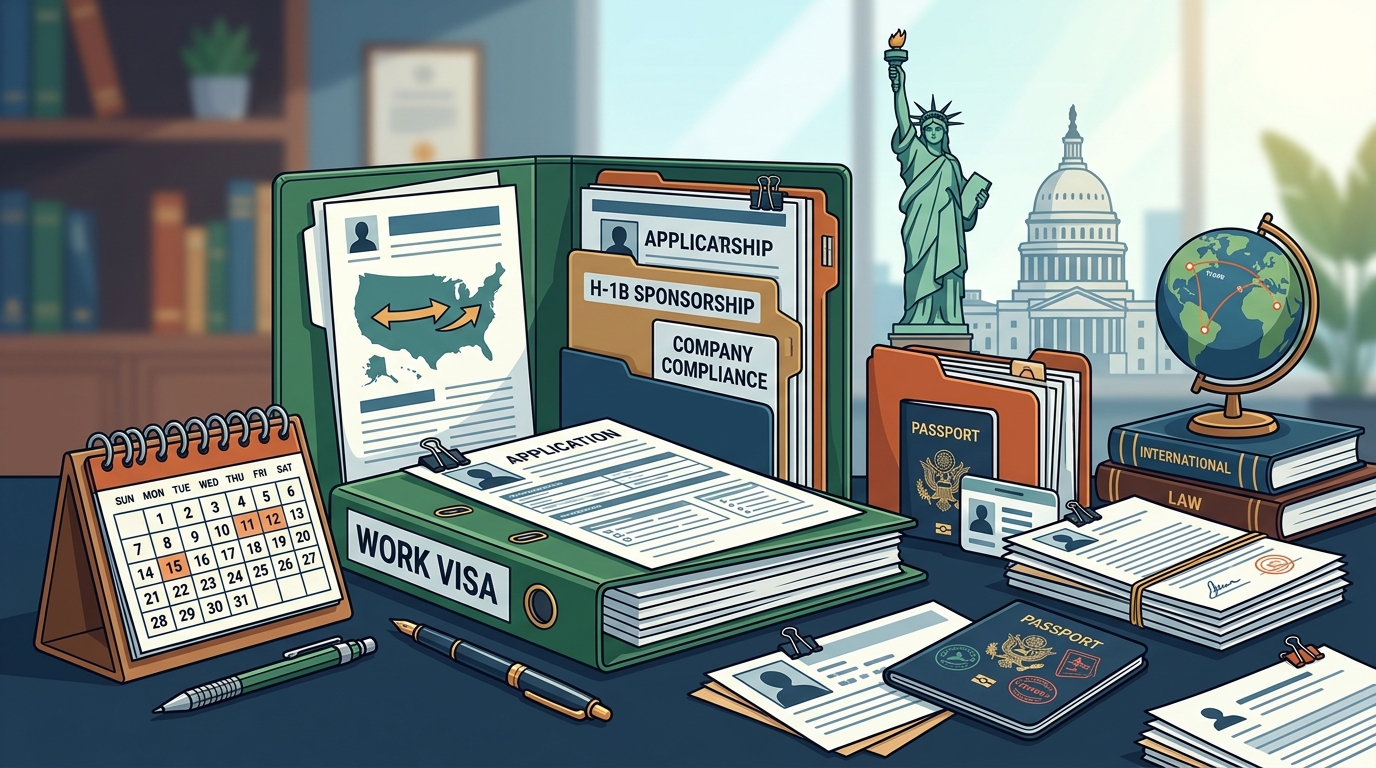
Company sponsorship is the process by which a U.S. employer petitions USCIS on behalf of a foreign worker, taking on legal and financial obligations to support that worker's visa application. The general steps include:
Step 1: Labor Condition Application (LCA)
Employers must file a certified LCA with the U.S. Department of Labor, attesting that hiring the foreign worker will not adversely affect the wages and working conditions of U.S. workers in similar roles.
Step 2: Petition Filing (Form I-129)
After LCA certification, the employer files Form I-129 with USCIS. This petition includes evidence of the job's specialty nature, the worker's qualifications, and the offered wage level.
Step 3: Approval and Visa Issuance
Once approved, the beneficiary applies for the visa at a U.S. consulate or, if already in the country, requests a change of status. BridgehouseLaw's business immigration lawyers guide employers through every step, from LCA compliance to post-approval obligations like I-9 audits.
What to Look for in an Immigration Attorney
Industry Experience
Choose a firm with proven experience in employment-based immigration. At BridgehouseLaw, our team assists businesses of all sizes, from startups to multinational corporations, with visa applications, compliance audits, and workforce management strategies.
International Reach
If your company operates across borders, you need attorneys who understand multiple legal systems. BridgehouseLaw has offices in Atlanta, Charlotte, Berlin, Cologne, Guatemala City, São Paulo, and Vancouver, giving clients truly global coverage.
Comprehensive Services
Immigration rarely exists in isolation. The best firms also handle business formation, employment law, and contract drafting, creating a seamless experience for companies expanding into the U.S.
The H-1B Landscape: Key Data
The H-1B program remains the primary pathway for U.S. employers to hire skilled foreign professionals. Here are the numbers that matter:
- The annual statutory cap is 65,000 visas, plus 20,000 for holders of a U.S. master's degree or higher.
- For FY 2025, USCIS received 470,342 registrations and selected 114,017 beneficiaries in the initial round.
- The full-year FY 2025 H-1B approval rate was 97.9%, with 406,349 petitions approved out of 415,275 adjudicated.
- Since FY 2025, USCIS uses a beneficiary-centric lottery, meaning each individual gets only one entry regardless of how many employers register them.
These figures highlight the importance of filing strong, well-documented petitions. A qualified immigration attorney can mean the difference between approval and denial.
Key Takeaways
- An immigration lawyer specializing in business immigration is essential for work visa and sponsorship cases.
- The H-1B, L-1, and E-2 are the most common employer-sponsored visa categories for skilled workers.
- Company sponsorship requires an LCA filing with the Department of Labor before petitioning USCIS.
- The FY 2025 H-1B approval rate was 97.9%, but proper documentation remains critical to avoid denials.
- USCIS now uses a beneficiary-centric selection process, reducing duplicate registrations.
- Choose a law firm with both immigration and corporate law expertise for a seamless U.S. market entry.
- BridgehouseLaw provides comprehensive immigration and corporate legal services across seven global offices.
Frequently Asked Questions
What does an immigration lawyer do for work visa cases?
An immigration lawyer prepares and files visa petitions, ensures compliance with USCIS and Department of Labor requirements, responds to Requests for Evidence, and advises on long-term immigration strategy including green card pathways.
How much does it cost to sponsor an employee for a work visa?
Costs vary by visa type. H-1B filing fees include a base fee, fraud prevention fee, ACWIA training fee, and the new Asylum Program Fee introduced in April 2024. Total employer costs typically range from $2,000 to $10,000 or more, depending on company size and premium processing choices.
What is the difference between an H-1B and an L-1 visa?
An H-1B visa is for specialty occupation roles requiring at least a bachelor's degree, while an L-1 visa is for intracompany transferees who hold managerial, executive, or specialized knowledge positions. L-1 visas do not have an annual cap.
Can a small business sponsor a foreign worker?
Yes. Businesses of any size can sponsor foreign workers, provided they can demonstrate a legitimate need, pay the prevailing wage, and meet all USCIS requirements. BridgehouseLaw regularly assists small and mid-sized companies with sponsorship filings.
How long does the work visa process take?
Standard H-1B processing can take three to six months. Premium processing, available for an additional fee, guarantees a response within 15 business days. L-1 and E-2 timelines vary based on consular processing schedules.
What happens if my work visa petition is denied?
If denied, you may file a motion to reopen or reconsider with USCIS, or appeal to the Administrative Appeals Office (AAO). An experienced attorney can evaluate whether refiling or pursuing an alternative visa category is the better path.
Does BridgehouseLaw handle immigration cases for international companies?
Yes. BridgehouseLaw specializes in assisting international businesses, particularly German and European companies, with U.S. market entry. Our team handles visa applications for L-1, H-1B, and E-2 categories alongside corporate formation and compliance services.
Get Expert Immigration Legal Help Today
Whether you are an employer looking to sponsor a key hire or a professional seeking a work visa, having the right legal team makes all the difference. Contact BridgehouseLaw's immigration attorneys to schedule a consultation and take the first step toward a successful visa petition.