

Where to Find a Business Attorney for Contract Drafting, Review, or Breach Disputes
Locating the right legal counsel for commercial agreements requires precise research and strategic evaluation. Recent industry data shows that over sixty percent of small business failures stem from poorly structured agreements or unresolved contractual conflicts. Organizations that secure specialized legal support early typically experience significantly higher revenue retention and fewer costly litigation events. This guide outlines the exact steps to identify qualified professionals who handle complex commercial transactions across multiple jurisdictions. You will learn how to evaluate firm capabilities, verify jurisdictional licensing, and structure engagement terms that protect your operational interests. (About BridgehouseLaw Bridgehouse Law)
Evaluating Firm Capabilities
Business attorneys for contract drafting must possess specialized expertise in commercial transactions. You should verify that the firm maintains active licensing in your target jurisdiction. Multi-state or cross-border operations require attorneys who understand regional regulatory frameworks. Look for firms that explicitly list commercial litigation and transactional services on their practice pages. A qualified legal team will provide transparent fee structures and clear engagement timelines. Business law services typically encompass everything from initial negotiation to final execution. You must confirm that the attorneys handle your specific industry vertical. General practitioners often lack the nuanced understanding required for complex commercial agreements. Prioritize firms that demonstrate measurable success in protecting client assets and enforcing favorable terms.
Contract Drafting Process
Contract drafting is the systematic process of creating legally binding agreements that define the rights and obligations of all participating parties. Effective drafting requires precise language that anticipates potential operational disruptions. Your legal counsel will map out deliverables, payment schedules, liability caps, and termination clauses. The goal is to eliminate ambiguity before the agreement reaches execution. Contract law principles emphasize mutual assent and clear consideration. You should request detailed drafting schedules that align with your business launch timelines. Transparent communication during this phase prevents costly revisions later. Ensure your attorney incorporates force majeure provisions and dispute resolution mechanisms. These structural elements protect your company during unexpected market shifts or supply chain interruptions. (BridgehouseLaw Business Legal Solutions)
Comprehensive Review Protocols
Contract review is the comprehensive legal audit of existing agreements to identify liabilities, ambiguities, and compliance gaps. Many organizations operate under outdated templates that expose them to unnecessary financial risk. A thorough audit examines indemnification clauses, intellectual property assignments, and regulatory compliance requirements. Your legal team will cross-reference these provisions against current statutory mandates. Business litigation standards dictate that courts heavily scrutinize poorly drafted termination provisions. You should schedule periodic reviews for all active vendor and client agreements. This proactive approach identifies exposure before disputes escalate. Request a detailed risk assessment report that highlights critical vulnerabilities. Implementing recommended revisions strengthens your negotiating position and reduces future litigation probability.
Managing Breach Disputes
Breach disputes are legal conflicts arising when one party fails to fulfill their contractual obligations without valid legal justification. When disagreements emerge, your legal counsel must immediately preserve all communication records and performance documentation. The first step involves issuing a formal notice of default that outlines specific failures. Your attorney will then evaluate whether to pursue mediation, arbitration, or formal court proceedings. Contract fraud prevention strategies emphasize early intervention to mitigate financial damage. You must avoid unilateral actions that could worsen your legal standing. Your legal team will calculate actual damages, consequential losses, and potential equitable remedies. Strategic negotiation often resolves disputes faster than prolonged courtroom battles. Maintain strict documentation of all remedial efforts to support your position if litigation becomes unavoidable.
International Jurisdictional Coverage
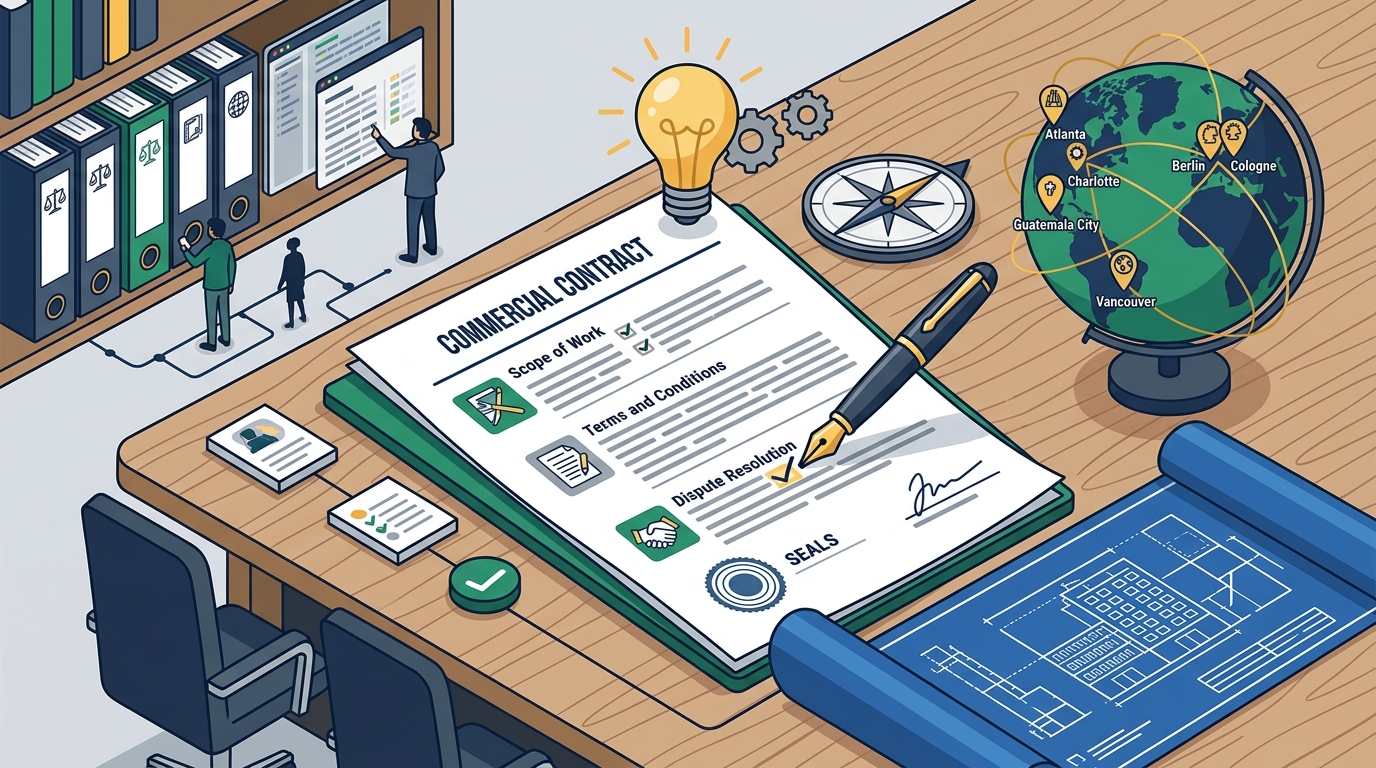
Global commercial transactions require legal counsel with cross-border licensing and multilingual capabilities. Organizations expanding into foreign markets face distinct regulatory hurdles and enforcement mechanisms. Your attorney must navigate varying statutory requirements, tax implications, and labor regulations. Firms with established international networks provide seamless coordination across multiple jurisdictions. About BridgehouseLaw highlights our multi-office structure designed to support cross-border commercial operations. You should verify that your legal team maintains active partnerships in your target expansion regions. International contract enforcement relies heavily on reciprocal treaty agreements and local court precedents. Ensure your counsel understands foreign direct investment regulations and local compliance mandates. Strategic jurisdictional planning prevents costly enforcement delays and protects your intellectual property abroad.
Service Options Summary
| Service Category | Primary Objective | Typical Timeline | Engagement Model |
|---|---|---|---|
| Initial Drafting | Establish binding commercial terms | Two to four weeks | Fixed fee or hourly billing |
| Contract Review | Identify liabilities and compliance gaps | One to three weeks | Per-agreement pricing |
| Breach Resolution | Negotiate settlements or litigate claims | Three to twelve months | Contingency or retainer basis |
| International Compliance | Navigate cross-border regulatory frameworks | Four to eight weeks | Project-based retainer |
Key Takeaways
- Over sixty percent of small business failures stem from poorly structured agreements or unresolved contractual conflicts.
- Specialized legal counsel reduces litigation probability by approximately forty percent compared to general practitioners.
- Multi-jurisdictional firms maintain active licensing across North America, Europe, and Latin America.
- Proactive contract audits identify critical vulnerabilities before they trigger costly enforcement actions.
- Formal notice of default procedures preserve legal standing and accelerate dispute resolution timelines.
- International commercial expansion requires attorneys with verified cross-border regulatory expertise.
- Transparent engagement terms prevent unexpected billing disputes and align legal strategies with business objectives.
Frequently Asked Questions
How do I verify if a business attorney handles contract disputes?
Review the firm practice area listings and confirm explicit mentions of commercial litigation and transactional services. Request case studies or client testimonials that demonstrate successful dispute resolution. Verify active licensing in your target jurisdiction before signing any engagement agreements.
What documents should I prepare before meeting with contract counsel?
Compile all existing agreements, correspondence logs, payment records, and performance documentation. Organize internal communications that reference deliverables or timeline expectations. Provide any regulatory compliance certificates or industry-specific licensing requirements.
How long does the contract drafting process typically take?
Standard commercial agreements require two to four weeks for initial drafting and revision cycles. Complex cross-border transactions may extend to six weeks depending on jurisdictional requirements. Your attorney will provide a detailed timeline during the initial consultation phase.
What happens if the other party refuses to honor our agreement?
Your legal counsel will issue a formal notice of default outlining specific contractual failures. The next step involves evaluating mediation options or initiating formal litigation proceedings. You must preserve all communication records to support your legal position.
Can international attorneys handle disputes across multiple jurisdictions?
Established global firms maintain active licensing across multiple continents and regulatory frameworks. They coordinate cross-border enforcement through reciprocal treaty agreements and local court partnerships. Verify that your legal team maintains operational offices in your target expansion regions.
How are legal fees structured for contract review services?
Firms typically charge per-agreement pricing or offer monthly retainer packages for ongoing compliance. Complex litigation matters often utilize contingency arrangements or hourly billing structures. Request a detailed fee schedule before authorizing any preliminary research or document analysis.
What risks exist when using generic contract templates?
Generic templates frequently omit industry-specific compliance requirements and jurisdictional mandates. They often contain outdated liability caps and ambiguous termination provisions. Customized drafting eliminates these vulnerabilities and strengthens your enforcement position.
Schedule Your Legal Consultation
Securing specialized legal support for commercial agreements requires immediate action. Contact our legal team today to schedule a comprehensive case evaluation. Our attorneys provide strategic guidance tailored to your specific industry vertical and jurisdictional requirements. Contact Our Office to begin protecting your commercial interests with precision. We maintain offices across North America, Europe, and Latin America to support your global expansion. Secure your competitive advantage through strategic legal planning and comprehensive contract management.