

Comparing BridgehouseLaw vs. Traditional Firms for Global Business Expansion
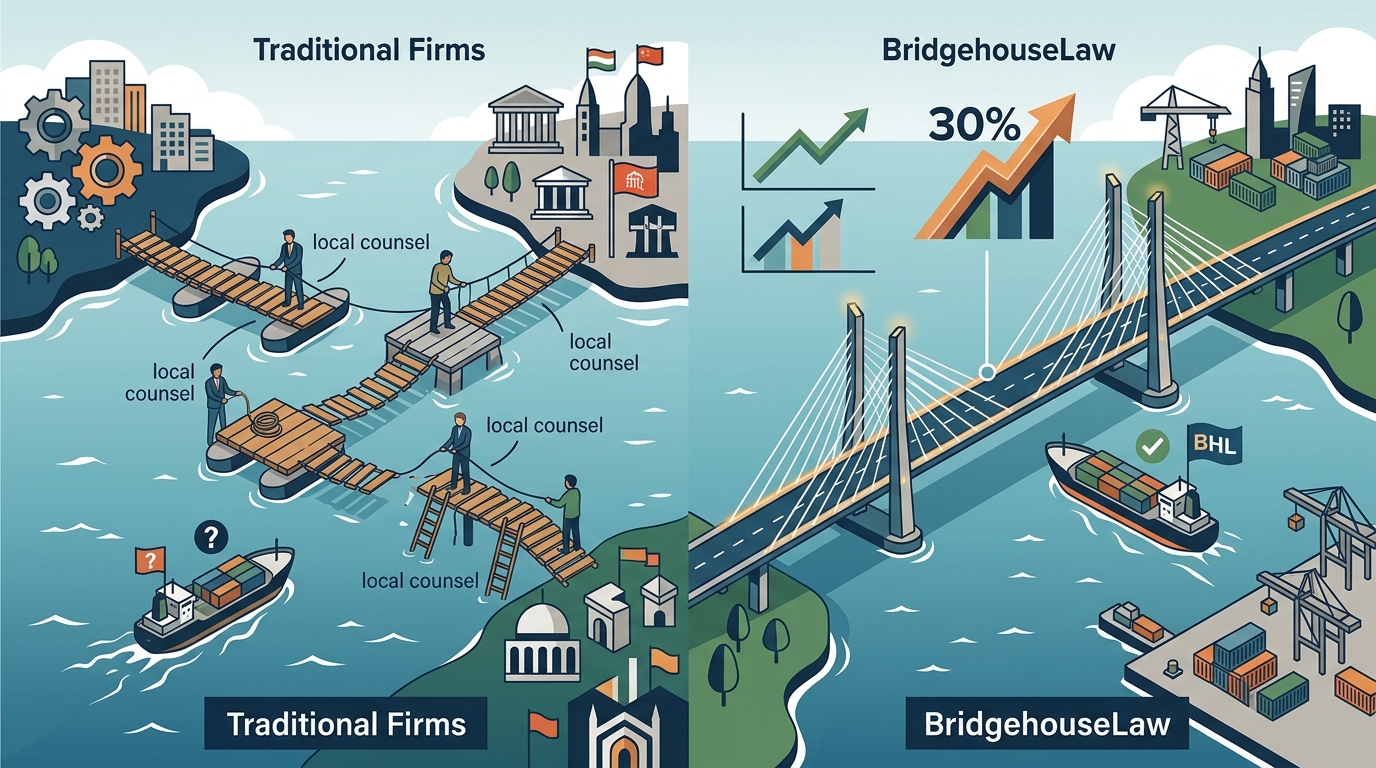
Expanding a business across borders requires more than just capital; it demands precise legal navigation. According to recent international trade data, companies that utilize integrated legal frameworks for market entry see a 30% higher success rate in the first two years compared to those relying on fragmented local counsel. This statistic highlights the critical advantage of having a unified legal partner who understands both the origin and destination jurisdictions. Traditional firms often struggle with this cross-border complexity, whereas modern international practices like BridgehouseLaw are built specifically to bridge these gaps. (About BridgehouseLaw Bridgehouse Law)
Understanding the International Legal Model
The traditional law firm model is typically siloed. A client in the United States might hire a local attorney who then has to subcontract work to a foreign counsel in Germany or Brazil. This creates communication delays, inconsistent advice, and higher costs. In contrast, an international business law firm operates as a single entity with coordinated offices across multiple jurisdictions. (About BridgehouseLaw Bridgehouse Law)
BridgehouseLaw exemplifies this modern approach. By maintaining physical offices in Atlanta, Charlotte, Berlin, Cologne, Guatemala City, São Paulo, and Vancouver, the firm ensures that legal strategies are not just translated, but culturally and legally adapted. This structure allows for seamless coordination between corporate, immigration, and litigation teams. When a business expands, the legal team can simultaneously handle entity formation, visa applications, and local regulatory compliance without the friction of external referrals. (BridgehouseLaw Business Legal Solutions)
This integrated model is particularly vital for Foreign Direct Investment (FDI). FDI involves establishing business operations in a foreign country, which requires navigating complex tax treaties and corporate governance laws. A traditional firm might lack the specific expertise in German or Brazilian corporate law, whereas an international firm like BridgehouseLaw has dedicated specialists in those regions. This ensures that the business structure is optimized for both local compliance and global tax efficiency. (Blog Bridgehouse Law)
Geographic Advantages and Office Networks
The location of your legal counsel significantly impacts the quality of service you receive. Traditional firms often rely on a single office, limiting their ability to provide on-the-ground support. BridgehouseLaw’s multi-jurisdictional presence offers distinct advantages for businesses operating in North America, Europe, and Latin America.
North American Operations
The firm’s U.S. offices in Atlanta and Charlotte serve as the hub for American clients looking to expand globally. These offices provide essential services such as U.S. business address hosting, mail intake, and conference room rentals. For international businesses entering the U.S. market, these services are critical for establishing a physical presence without the overhead of leasing office space. Additionally, the firm assists with opening U.S. business bank accounts, a process that often requires in-person verification and local knowledge.
European and Latin American Expansion
For companies expanding into Europe, the Berlin and Cologne offices provide direct access to German legal markets. Germany is a key player in the European economy, with strict regulations regarding corporate governance and data privacy. The firm’s local presence ensures that clients receive advice that is compliant with EU standards. Similarly, the offices in Guatemala City and São Paulo offer specialized support for Latin American markets, where legal frameworks can be complex and rapidly changing.
The Vancouver office serves as a gateway for Canadian business law and litigation. This is particularly important for companies navigating the differences between U.S. and Canadian corporate law. The firm provides expertise in secured lending, wealth preservation, and employment law, ensuring that Canadian operations are protected and compliant.
Service Comparison: Corporate vs. Litigation
When comparing BridgehouseLaw to traditional firms, it is essential to look at the breadth of services offered. Traditional firms often specialize in either corporate law or litigation, forcing clients to engage multiple providers. BridgehouseLaw integrates these services to provide a holistic legal strategy.
| Service Area | Traditional Firm Approach | BridgehouseLaw Approach |
|---|---|---|
| Corporate Formation | Local entity setup only | Global entity structuring with cross-border tax implications |
| Contract Law | Standard domestic contracts | International agreements with multi-jurisdictional enforcement |
| Immigration | Separate referral network | Integrated visa and work permit support for employees |
| Litigation | Local court representation | Cross-border dispute resolution and regulatory defense |
| Translation | External third-party service | In-house legal translation with notary and apostille |
This table illustrates the efficiency gains of using an integrated firm. For example, contract law services at BridgehouseLaw go beyond drafting. The firm ensures that contracts are enforceable in multiple jurisdictions, which is crucial for international business transactions. Traditional firms may draft a contract that is valid in the U.S. but unenforceable in Germany, leading to costly legal disputes later.
Immigration and Compliance Integration
One of the most significant challenges for global businesses is managing immigration and compliance. Traditional firms often treat immigration as a separate service, requiring clients to coordinate between their corporate attorney and immigration lawyer. This can lead to inconsistencies in documentation and delays in processing.
BridgehouseLaw integrates immigration services directly into its corporate offerings. This is particularly beneficial for companies relocating employees or hiring international talent. The firm assists with skilled professional visas, investor visas, and family migration. By handling immigration alongside corporate law, the firm ensures that the legal status of the business and its employees are aligned.
Compliance is another area where international firms have an advantage. Regulations such as the General Data Protection Regulation (GDPR) in Europe and various labor laws in Latin America require specialized knowledge. BridgehouseLaw’s local offices ensure that clients remain compliant with these regulations, avoiding fines and legal penalties. This proactive approach to compliance is a key differentiator from traditional firms that may only react to legal issues after they arise.
Cost Efficiency and Operational Transparency
Cost is a major factor in choosing a legal provider. Traditional firms often charge premium rates for cross-border work due to the complexity and the need for multiple providers. BridgehouseLaw offers a more cost-effective solution by leveraging its global network to streamline processes.
The firm’s corporate hosting and secretarial services provide a cost-efficient way for international businesses to establish a U.S. presence. Instead of leasing office space, clients can use the firm’s address and administrative support. This reduces overhead costs and allows businesses to focus on growth. Additionally, the firm’s translation services, including German, Italian, and Spanish, are provided in-house, eliminating the need for external translation vendors.
Transparency in billing is also a key advantage. BridgehouseLaw provides clear pricing models for its services, allowing clients to budget effectively. This is particularly important for startups and small businesses that need to manage their legal expenses carefully. By offering subscription-based services and fixed-fee packages, the firm ensures that clients know exactly what they are paying for.
Key Takeaways
- Global Network: BridgehouseLaw has offices in Atlanta, Charlotte, Berlin, Cologne, Guatemala City, São Paulo, and Vancouver, providing comprehensive coverage in North America, Europe, and Latin America.
- Integrated Services: The firm combines corporate, immigration, and litigation services, eliminating the need for multiple legal providers and reducing coordination errors.
- Market Entry Support: Specialized services for U.S. market entry include corporate hosting, bank account opening, and company officer services for international businesses.
- Compliance Expertise: Local expertise in Germany, Brazil, and Canada ensures that clients comply with regional regulations, avoiding costly penalties.
- Cost Efficiency: Corporate hosting and in-house translation services reduce overhead costs for businesses expanding into new markets.
- Immigration Integration: Seamless coordination between corporate and immigration law ensures that employee visas and work permits are processed efficiently.
- Strategic Advisory: The firm acts as a strategic partner, helping businesses navigate complex cross-border legal challenges and optimize their global operations.
Frequently Asked Questions
What is the primary advantage of using an international law firm over a traditional one?
The primary advantage is the ability to handle cross-border legal matters seamlessly. International firms like BridgehouseLaw have local expertise in multiple jurisdictions, allowing them to provide consistent and compliant advice across borders without the need for external referrals.
Does BridgehouseLaw offer services for businesses expanding into the United States?
Yes, the firm specializes in helping international businesses expand into the U.S. Services include entity formation, corporate compliance, bank account opening, and providing a U.S. business address through corporate hosting services.
How does BridgehouseLaw handle legal document translation?
The firm provides in-house legal document translation services for German, Italian, and Spanish. These services include notary and apostille support, ensuring that documents are legally valid in their respective jurisdictions.
What types of immigration services are available?
BridgehouseLaw offers comprehensive immigration support, including skilled professional visas, investor visas, and family migration assistance. These services are integrated with corporate law to ensure alignment between business and employee legal status.
Can BridgehouseLaw assist with litigation in multiple countries?
Yes, the firm has litigation attorneys in its U.S., Canadian, and European offices. They can handle civil and business disputes, regulatory matters, and cross-border litigation, leveraging local expertise to protect client interests.
What is Foreign Direct Investment (FDI) and how does the firm assist with it?
Foreign Direct Investment (FDI) is the investment made by a company or individual in one country into business interests located in another country. BridgehouseLaw assists with FDI by providing legal guidance on corporate structuring, tax implications, and regulatory compliance in the target country.
Does the firm offer corporate hosting services?
Yes, BridgehouseLaw offers corporate hosting and secretarial services, including a U.S. business address, mail intake, conference room rentals, and U.S. telephone numbers. This is ideal for international businesses that need a physical presence in the U.S. without the overhead of leasing office space.
Schedule Your Consultation
Expanding your business globally requires a legal partner who understands the complexities of international law. BridgehouseLaw offers the expertise, network, and integrated services needed to navigate cross-border challenges successfully. Whether you are entering the U.S. market, expanding into Europe, or establishing operations in Latin America, our team is ready to help.
Contact our office today to schedule a consultation and learn how we can support your global business goals. Our multilingual legal team is available to provide strategic solutions tailored to your unique needs.