

Essential Qualifications and Credentials for Work Visa Immigration Attorneys
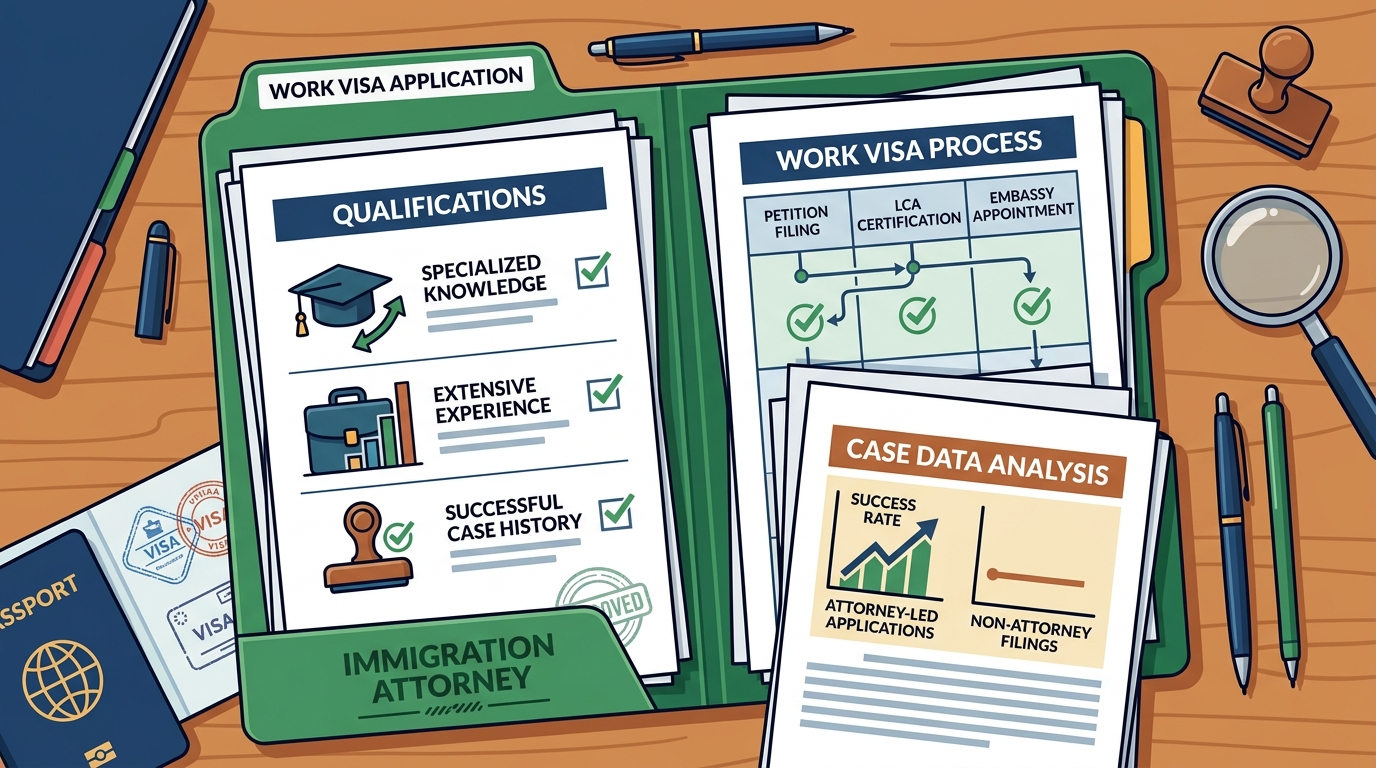
Securing the right legal representation is the single most critical factor in the success of a work visa application. According to recent industry data, cases handled by specialized immigration attorneys have a significantly higher approval rate compared to those filed without professional counsel. This statistic underscores the complexity of federal immigration law, where minor errors in documentation or procedural missteps can lead to costly delays or permanent bans. For employers and foreign nationals alike, understanding the specific qualifications of a potential attorney is not just due diligence; it is a strategic necessity. The landscape of U.S. immigration law is vast, ranging from H-1B specialty occupations to L-1 intracompany transfers, each requiring distinct legal expertise. Navigating this terrain demands a partner who possesses not only the technical license to practice law but also the specialized experience to anticipate regulatory hurdles before they arise. (Contact Us)
Bar Admission and State Licensing
The foundational requirement for any immigration attorney is active admission to the bar in at least one U.S. jurisdiction. Immigration law is federal, meaning it applies uniformly across the country, but attorneys must be licensed to practice law in their respective states to provide legal advice. This licensing ensures that the attorney has met rigorous educational and ethical standards set by the state supreme court. Without this credential, an individual cannot legally represent clients in immigration matters, and doing so constitutes the unauthorized practice of law.
However, bar admission alone is insufficient for complex work visa cases. The ideal candidate will hold active membership in the American Immigration Lawyers Association (AILA). This professional organization is the primary national association for immigration attorneys in the United States. Membership in AILA signals a commitment to staying current with rapidly changing immigration policies and regulations. Attorneys who are active members often participate in legislative advocacy and continuing legal education specific to immigration law. This ongoing engagement is crucial because immigration rules can shift with new presidential administrations or congressional actions. For more information on the role of professional associations, you can review AILA's official guidelines on attorney standards.
Specialized Experience in Visa Categories
Immigration law is not a monolith. It is a collection of distinct practice areas, each with its own procedural nuances. A work visa attorney must demonstrate deep, hands-on experience in the specific visa category relevant to your case. For technology professionals, this often means expertise in the H-1B, H-1B1, or O-1 visas. For corporate transfers, knowledge of the L-1 and E-2 visas is essential. Generalist immigration attorneys may handle family-based petitions but lack the depth required for complex employment-based cases.
When evaluating an attorney, ask about their volume of cases in your specific visa category. An attorney who files hundreds of H-1B petitions annually will have a refined process for drafting labor condition applications and responding to requests for evidence. This experience translates to faster processing times and fewer errors. According to data from the U.S. Citizenship and Immigration Services, specialized petitions are processed more efficiently when submitted with complete and accurate documentation. This highlights the importance of choosing an attorney who understands the specific evidentiary requirements for your industry. You can track current processing times and policy updates via the official USCIS processing times page.
Ethics and Compliance Standards
Immigration fraud is a serious concern for both the government and applicants. Therefore, the ethical standing of an attorney is paramount. A qualified work visa attorney must have a clean disciplinary record with their state bar association. Any history of sanctions, suspensions, or disbarment is a major red flag. Additionally, attorneys must adhere to strict ethical rules regarding client confidentiality and conflict of interest. They must avoid making guarantees about case outcomes, as immigration decisions are ultimately at the discretion of government officers.
Transparency in billing and fee structures is also a key ethical indicator. Reputable attorneys provide clear engagement letters that outline exactly what services are included in their fees. This prevents unexpected costs and ensures that clients understand the scope of representation. The American Bar Association provides a comprehensive framework for legal ethics that all licensed attorneys must follow. For detailed standards on professional conduct, refer to the ABA Model Rules of Professional Conduct. These rules serve as the baseline for ethical behavior in all legal practices, including immigration.
Industry Recognition and Peer Reviews
Recognition from peer review organizations and legal directories is a strong indicator of an attorney's competence and reputation. Awards such as Super Lawyers, Best Lawyers in America, or Martindale-Hubbell AV Preeminent ratings are not merely marketing tools. They are the result of rigorous peer review processes that evaluate legal ability and ethical standards. These ratings are often based on feedback from other lawyers and judges who have worked with the attorney.
For employers, this recognition provides a layer of assurance that the attorney is respected within the legal community. It suggests that the attorney is not only knowledgeable but also effective in advocacy. When an attorney is ranked highly in immigration law, it often reflects a consistent track record of successful outcomes. According to industry reports, clients are more likely to trust attorneys who have received independent peer recognition. This trust is built on the perception of excellence and reliability. You can verify these ratings and read detailed profiles on Super Lawyers or Best Lawyers in America.
Communication and Strategic Planning
Beyond credentials, the ability to communicate complex legal concepts clearly is vital. Immigration processes are often stressful and confusing for clients. A qualified attorney must be able to explain the timeline, risks, and requirements in plain language. They should provide regular updates and be responsive to client inquiries. Proactive communication prevents anxiety and ensures that clients are prepared for each step of the process.
Strategic planning is another critical component. A good attorney does not just file paperwork; they develop a strategy to maximize the chances of approval. This might involve preparing for potential audits, gathering strong evidence of specialty occupation status, or planning for future green card sponsorship. At Bridge House Law, we emphasize a client-centric approach that prioritizes clear communication and strategic foresight. Our team works closely with each client to tailor their immigration strategy to their unique career goals. Learn more about our dedicated services by visiting our Immigration Law practice page.
Comparing Attorney Qualifications
When selecting an immigration attorney, it is helpful to compare candidates across several key dimensions. The table below outlines the primary factors to consider when evaluating potential legal representation.
| Qualification Factor | Why It Matters | How to Verify |
|---|---|---|
| Bar Admission | Legal authority to practice law in the U.S. | State Bar Association Website |
| AILA Membership | Commitment to immigration law specialization. | AILA Attorney Search Tool |
| Case Volume | Indicates experience and efficiency in specific visa types. | Consultation and Client References |
| Peer Reviews | Independent validation of legal ability and ethics. | Legal Directories (Super Lawyers, etc.) |
| Fee Transparency | Prevents hidden costs and ensures clear expectations. | Engagement Letter Review |
Use this matrix to guide your initial screening process. Do not rely on a single factor. A combination of strong credentials, relevant experience, and positive client feedback provides the most reliable indicator of quality. For a deeper dive into our specific methodology, explore our About Us page to understand our firm's history and values.
Key Takeaways
- Active bar admission in a U.S. jurisdiction is the non-negotiable baseline for any immigration attorney.
- Membership in the American Immigration Lawyers Association (AILA) indicates a commitment to specialized practice.
- Experience in your specific visa category (e.g., H-1B, L-1) is more valuable than general immigration knowledge.
- Peer recognition from organizations like Super Lawyers validates an attorney's reputation among peers.
- Ethical compliance and a clean disciplinary record are essential for trust and risk management.
- Clear communication and strategic planning are critical for navigating complex immigration processes.
- Always verify credentials through official state bar and professional association databases.
Frequently Asked Questions
What is the most important credential for an immigration attorney?
The most important credential is active admission to the bar in a U.S. state, combined with specialized experience in immigration law. While AILA membership is highly recommended, bar admission is the legal requirement to practice.
Can a non-lawyer help with work visa applications?
No. Only licensed attorneys or accredited representatives can provide legal advice or represent clients before USCIS. Non-lawyers who charge fees for immigration advice are engaging in the unauthorized practice of law.
How do I verify an attorney's disciplinary history?
You can verify an attorney's disciplinary history through the state bar association website where they are licensed. Most state bars maintain online databases of public records regarding sanctions and complaints.
Why is AILA membership significant?
AILA membership is significant because it requires attorneys to adhere to a strict code of ethics and participate in continuing legal education specific to immigration law. It signals a dedication to the field.
What should I look for in an engagement letter?
An engagement letter should clearly outline the scope of services, total fees, payment schedule, and what happens if the case is unsuccessful. It serves as the contract between you and your attorney.
How long does it take to process an H-1B visa?
Processing times vary widely depending on the service center and whether premium processing is used. Standard processing can take several months, while premium processing guarantees a response in 15 calendar days. Check USCIS processing times for current estimates.
Can I switch immigration attorneys during my case?
Yes, you can switch attorneys at any time. However, it is important to ensure a smooth transition of documents and information to avoid delays. Your new attorney will need to file a notice of appearance to take over the case.
Contact Bridge House Law
Choosing the right immigration attorney is a decision that impacts your career and future in the United States. Do not leave your work visa application to chance. Partner with a team that combines rigorous legal expertise with a deep understanding of your professional goals. Bridge House Law is dedicated to providing clear, strategic, and effective immigration counsel. We invite you to schedule a consultation to discuss your specific needs. Visit our Contact page to book your appointment today and take the first step toward securing your work visa.