

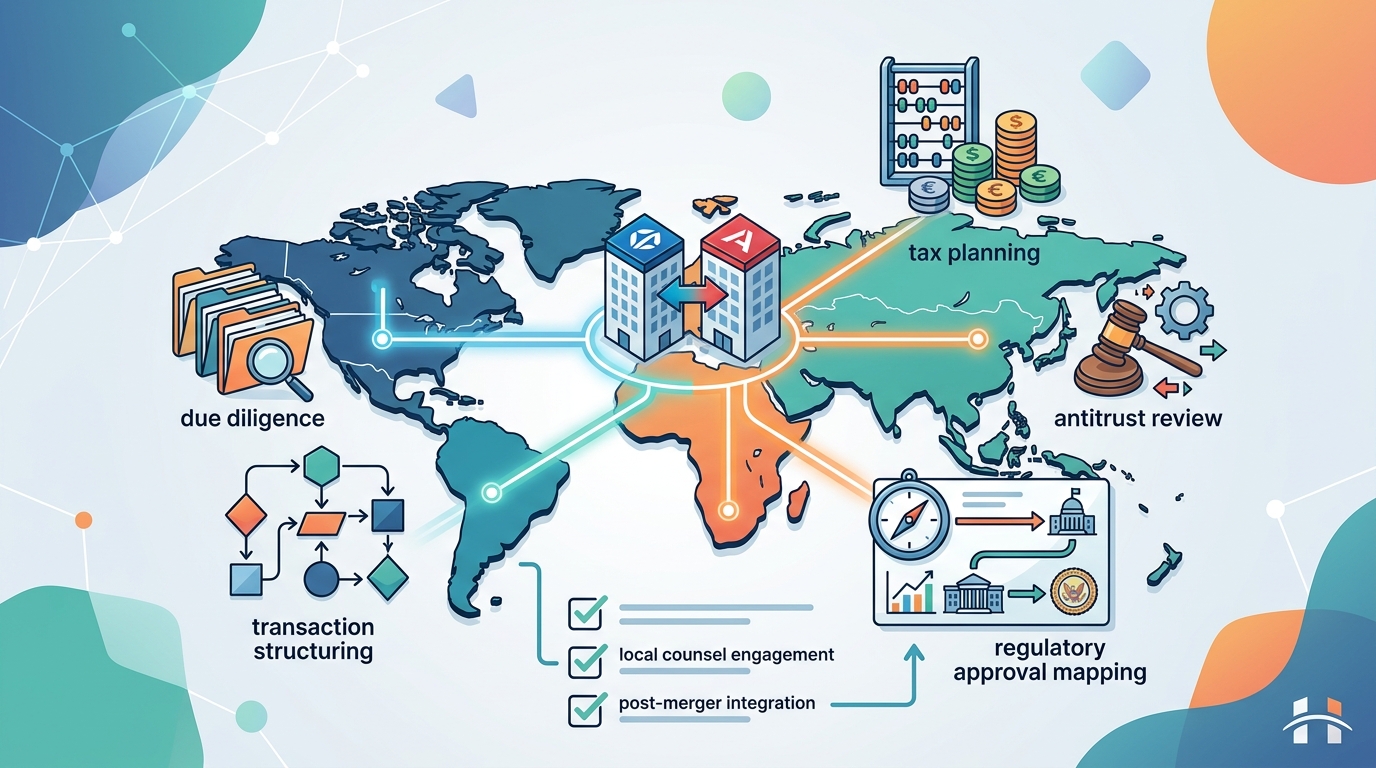
Cross-border corporate mergers and acquisitions are complex transactions requiring coordinated legal, tax, and regulatory strategies across multiple jurisdictions. BridgehouseLaw provides strategic guidance for businesses navigating these global deals. This guide covers essential steps including tax planning, transaction structuring, antitrust review, regulatory approval mapping, post-merger integration, due diligence, and local counsel engagement to ensure successful global expansion.
Tax Planning
Tax planning is a critical component of cross-border M&A, as it directly impacts the net value of the transaction. Effective planning involves analyzing the tax implications of the deal structure in both the home and host jurisdictions. This includes evaluating withholding taxes, transfer pricing rules, and potential double taxation issues. BridgehouseLaw assists clients in structuring deals to minimize tax liabilities while maintaining compliance with international tax laws.
Withholding Taxes and Double Taxation
Withholding taxes are often imposed on cross-border payments such as dividends, interest, and royalties. Understanding the applicable tax treaties between the two countries is essential to reduce or eliminate these taxes. Double taxation can erode profits if not properly managed through tax credits or exemptions. Our team reviews bilateral tax treaties to ensure optimal tax treatment for the transaction.
Transaction Structuring
Transaction structuring determines the legal and financial framework of the merger or acquisition. The choice between an asset purchase, stock purchase, or merger significantly affects liability, tax outcomes, and regulatory hurdles. A well-structured transaction aligns with the strategic goals of the acquirer and the seller. BridgehouseLaw provides expert advice on selecting the most appropriate structure for your specific cross-border deal.
Asset Purchase vs. Stock Purchase
An asset purchase involves buying specific assets and liabilities, offering greater control over what is acquired. A stock purchase transfers ownership of the target company, including all its assets and liabilities. The choice depends on factors such as the target's liability profile, tax considerations, and regulatory requirements. We help clients weigh these factors to select the best structure.
Antitrust Review
Antitrust review is a mandatory step in many cross-border M&A transactions, particularly when the combined market share of the parties exceeds certain thresholds. Regulatory authorities in both jurisdictions may require the parties to demonstrate that the deal will not substantially lessen competition. Failure to obtain antitrust clearance can result in the deal being blocked or subject to divestiture conditions. BridgehouseLaw guides clients through the antitrust filing process and prepares for potential regulatory inquiries. according to Largest cross border
Market Share Thresholds
Antitrust laws often trigger review when the combined market share of the merging parties exceeds a specific percentage, commonly 30% or 50% depending on the jurisdiction. Accurate calculation of market share is crucial to determine if a filing is required. Our team conducts thorough market analysis to assess antitrust risks and prepare necessary filings.
Regulatory Approval Mapping
Regulatory approval mapping involves identifying all regulatory bodies that must approve the transaction in each relevant jurisdiction. This includes foreign investment review, sector-specific regulators, and general competition authorities. A comprehensive map of required approvals helps in planning the timeline and resources needed for the deal. BridgehouseLaw creates detailed regulatory maps to ensure no approval is overlooked.
Foreign Investment Review
Many countries have foreign investment review mechanisms that scrutinize deals involving national security or critical infrastructure. These reviews can be lengthy and uncertain, requiring careful preparation and engagement with regulators. We help clients navigate these processes by preparing robust submissions and engaging with regulatory authorities proactively.
Post-Merger Integration
Post-merger integration is the process of combining the operations, cultures, and systems of the merging companies. Successful integration is key to realizing the synergies and value promised by the deal. This phase involves aligning business strategies, integrating IT systems, and managing employee transitions. BridgehouseLaw provides legal support for integration planning, including employment law compliance and contract novations.
Cultural and Operational Alignment
Cultural differences can pose significant challenges in cross-border mergers. Aligning corporate cultures and operational processes is essential for long-term success. We advise on best practices for cultural integration and provide legal frameworks to support smooth operational transitions.
Regulatory Approvals
Regulatory approvals are the formal permissions required from government authorities to complete a cross-border M&A transaction. These approvals can range from simple notifications to complex substantive reviews. The timeline for obtaining approvals varies by jurisdiction and the nature of the deal. BridgehouseLaw manages the regulatory approval process, ensuring timely submissions and effective communication with regulators.
Timeline and Strategy
Understanding the typical timelines for regulatory approvals is crucial for deal planning. Some approvals may take several months, while others can be obtained more quickly. We develop a strategic timeline that accounts for all regulatory steps and potential delays.
Due Diligence
Due diligence is the comprehensive investigation of the target company's legal, financial, and operational status. It helps identify potential risks and liabilities that could affect the deal's value. Thorough due diligence is essential for making informed decisions and negotiating appropriate protections in the transaction documents. BridgehouseLaw conducts rigorous due diligence to uncover hidden risks and ensure a sound investment.
Legal and Financial Due Diligence
Legal due diligence examines contracts, litigation, regulatory compliance, and intellectual property. Financial due diligence assesses the target's financial statements, tax positions, and cash flows. Both are critical for valuing the target and identifying potential liabilities. Our team provides detailed due diligence reports to support your decision-making.
Deal Structuring
Payment Mechanisms
Tax Considerations
Tax considerations extend beyond initial planning to include the ongoing tax implications of the post-merger entity. This includes transfer pricing, permanent establishment risks, and tax reporting requirements in multiple jurisdictions. Proper tax structuring ensures compliance and minimizes the overall tax burden. BridgehouseLaw provides ongoing tax advice to support the post-merger entity's operations.
Transfer Pricing and Permanent Establishment
Transfer pricing rules require related parties to price transactions at arm's length. Non-compliance can lead to significant tax adjustments and penalties. Permanent establishment risks arise when a company has a sufficient physical or digital presence in a foreign country. We advise on transfer pricing policies and assess permanent establishment risks to ensure compliance.
Post-Closing Integration
Post-closing integration focuses on the practical steps taken after the deal closes to combine the two companies. This includes integrating management teams, consolidating operations, and achieving cost synergies. Effective post-closing integration is crucial for realizing the strategic benefits of the merger. BridgehouseLaw supports clients in executing integration plans and addressing any legal issues that arise during this phase.
Achieving Synergies
Cost synergies are often a primary driver of M&A value. Achieving these synergies requires disciplined execution and clear accountability. We help clients develop integration plans with specific targets and timelines to ensure synergies are realized.
Local Counsel Engagement
Local counsel engagement is essential for navigating the specific legal requirements of the host jurisdiction. Local lawyers provide expertise on local laws, regulatory practices, and cultural nuances that may not be apparent to foreign counsel. Engaging reputable local counsel ensures that all local legal requirements are met and that the deal is structured in compliance with local regulations. BridgehouseLaw coordinates with local counsel to provide a seamless legal experience for our clients.
Choosing the Right Local Counsel
Selecting the right local counsel involves assessing their expertise in M&A, their understanding of the specific industry, and their ability to work effectively with foreign teams. We help clients identify and engage the best local counsel for their specific transaction.
Key Takeaways
- Tax planning is critical for minimizing the tax burden in cross-border M&A.
- Transaction structuring affects liability, tax outcomes, and regulatory hurdles.
- Antitrust review is mandatory in many jurisdictions and can block deals if not managed properly.
- Regulatory approval mapping helps identify all required permissions and plan timelines.
- Post-merger integration is key to realizing the strategic value of the deal.
- Due diligence is essential for identifying risks and liabilities in the target company.
- Deal structuring involves negotiating terms that protect both parties and facilitate closing.
- Local counsel engagement ensures compliance with host jurisdiction laws and regulations.
Frequently Asked Questions
What is the first step in a cross-border M&A transaction?
The first step is typically conducting due diligence to assess the target company's legal, financial, and operational status. This helps identify potential risks and informs the deal strategy.
How long does a cross-border M&A deal take to close?
The timeline varies depending on the complexity of the deal and the regulatory approvals required. Simple deals may close in a few months, while complex deals with extensive regulatory reviews can take over a year.
What are the main risks in cross-border M&A?
Main risks include regulatory rejection, tax liabilities, cultural integration challenges, and hidden liabilities in the target company. Thorough due diligence and proper structuring help mitigate these risks.
Do I need local counsel for a cross-border deal?
Yes, local counsel is essential for navigating the specific legal requirements of the host jurisdiction. They provide expertise on local laws and regulatory practices.
How does tax planning affect the deal structure?
Tax planning can influence the choice between an asset purchase and a stock purchase, as well as the overall deal structure. Proper tax planning can significantly reduce the tax burden and increase the net value of the deal.
What is antitrust review?
Antitrust review is the process by which regulatory authorities assess whether a merger or acquisition will substantially lessen competition in the market. It is a mandatory step in many jurisdictions. according to Cross border mergers
How does BridgehouseLaw assist with cross-border M&A?
BridgehouseLaw provides comprehensive legal support for cross-border M&A, including tax planning, transaction structuring, regulatory approval, due diligence, and post-merger integration. Our team has expertise in multiple jurisdictions and works with local counsel to ensure a seamless process.