

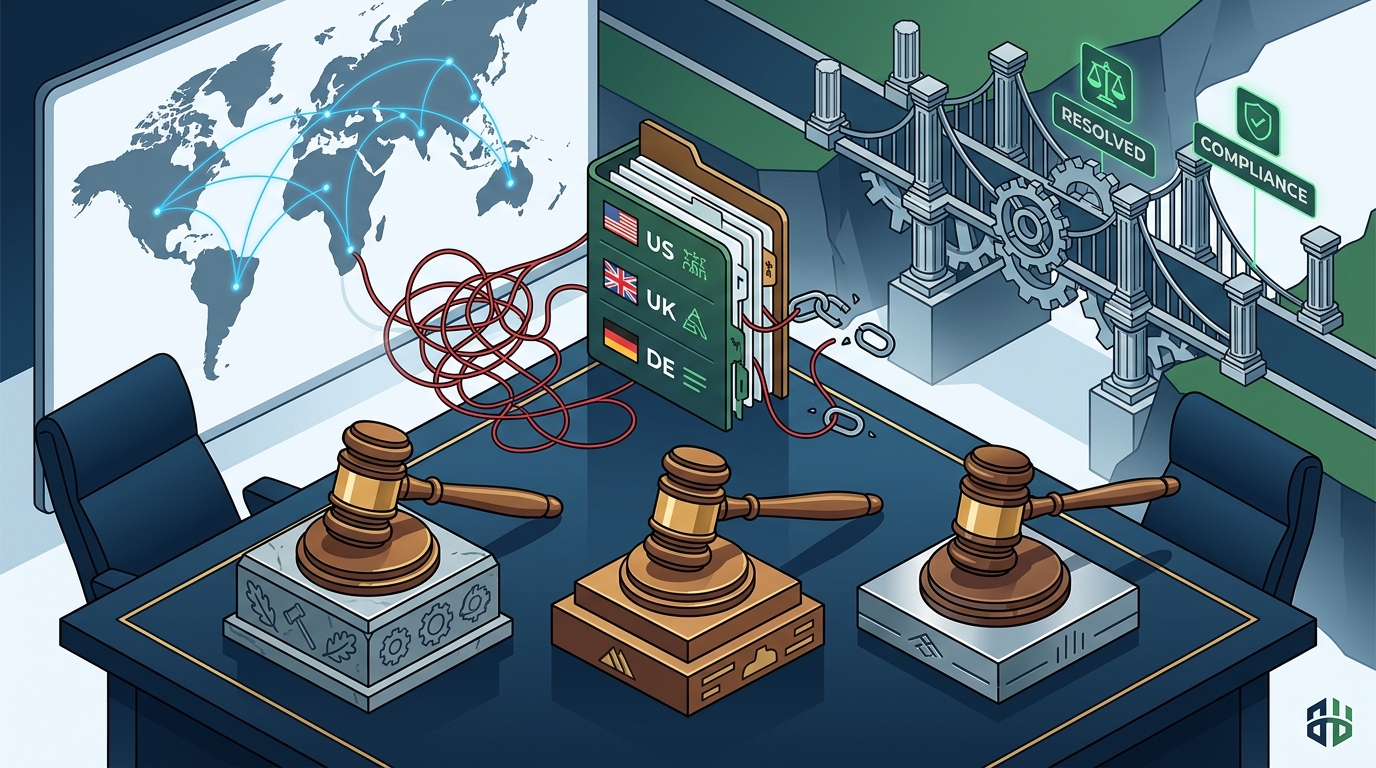
International business expansion has accelerated dramatically, with cross-border employment relationships becoming a standard operational model for multinational corporations. According to recent workforce mobility reports, over 40% of global enterprises now manage employees across at least three different jurisdictions, significantly increasing the complexity of labor relations. When disputes arise in this fragmented legal landscape, companies face a dual challenge: resolving the immediate conflict while ensuring compliance with conflicting national labor laws. This guide outlines the strategic framework for handling these high-stakes situations effectively.
Understanding Jurisdiction and Applicable Law
The first step in any cross-border employment dispute is determining which legal framework applies. Jurisdictional conflicts are common when an employee works remotely from one country while being employed by a company headquartered in another. Jurisdiction is the legal authority of a court to hear and decide a case. Without clear determination, companies risk facing lawsuits in multiple countries simultaneously, leading to prohibitive legal costs and inconsistent rulings.
BridgehouseLaw assists international businesses in navigating these complex waters. Our team specializes in business law services that clarify the governing law for employment contracts. We analyze the employee's physical location, the place of performance, and the company's operational base to establish the most favorable legal venue. This proactive approach prevents jurisdictional ambiguity before a dispute escalates.
Many countries have mandatory labor protections that cannot be waived by contract. For instance, European Union member states often enforce strict working hour regulations and termination protections that override contractual terms. Ignoring these local mandates can result in severe penalties and reputational damage. Our global office network ensures that we understand the specific labor codes in every jurisdiction where your business operates.
The Contractual Foundation of Dispute Resolution
A robust employment contract is the primary defense against costly cross-border disputes. The contract must explicitly define the terms of engagement, including compensation, benefits, and termination clauses. A contract is a legally binding agreement between two or more parties that creates mutual obligations. In international contexts, this document must also specify the dispute resolution mechanism, such as arbitration or litigation, and the governing law.
BridgehouseLaw provides expert contract law services to draft agreements that are enforceable across borders. We ensure that your contracts comply with local labor standards while protecting your company's interests. Key elements include clear definitions of role responsibilities, intellectual property rights, and confidentiality obligations. Ambiguity in these areas is a leading cause of employment litigation.
For companies expanding into new markets, we offer corporate law services that integrate employment structures into the broader business strategy. This includes setting up local entities or using Employer of Record (EOR) arrangements to manage compliance. Proper structuring reduces liability and simplifies the management of remote or expatriate staff.
Mediation and Alternative Dispute Resolution
Before resorting to litigation, companies should consider alternative dispute resolution (ADR) methods. Mediation and arbitration are often faster, more cost-effective, and less adversarial than court proceedings. Mediation is a voluntary process where a neutral third party helps disputing parties reach a mutually acceptable agreement. This approach preserves business relationships and maintains confidentiality, which is crucial for high-profile executives or sensitive technical roles.
Our immigration law services team often works in tandem with dispute resolution specialists to address visa-related issues that may complicate employment conflicts. For example, if an employee's work permit is tied to their employment, termination can trigger immediate immigration consequences. Addressing these nuances early can prevent legal limbo for the employee and compliance risks for the employer.
Arbitration clauses in employment contracts can streamline the resolution process by selecting a specialized arbitrator familiar with international labor standards. This is particularly useful in international trade contexts where parties prefer private, binding decisions over public court trials. We help clients draft these clauses to ensure they are enforceable in the relevant jurisdictions.
Navigating International Litigation
When ADR fails, litigation becomes necessary. Cross-border litigation involves complex procedural rules, including the service of process, evidence collection, and enforcement of judgments. Litigation is the process of taking a dispute to a court of law for resolution. Companies must be prepared for lengthy timelines and significant legal expenses.
BridgehouseLaw's litigation attorneys have extensive experience representing clients in international disputes. We coordinate with local counsel in key jurisdictions to ensure that your case is presented effectively. Our offices in Atlanta, Charlotte, Berlin, Cologne, Guatemala City, São Paulo, and Vancouver provide a strategic advantage in managing these cases.
Enforcing a judgment across borders can be challenging. Many countries have treaties that facilitate the recognition of foreign judgments, but others do not. Our team advises on the practicalities of enforcement, including asset tracing and seizure. We also handle real estate transactions that may be collateral in high-value employment disputes involving executive compensation packages.
Immigration and Visa Implications
Employment disputes often intersect with immigration law, particularly when the employee is a foreign national. Termination can lead to the revocation of work visas, requiring immediate departure from the host country. Immigration law governs the legal status of individuals within a country, including work permits and visas. Failure to manage this transition properly can result in deportation and future entry bans.
Our immigration law services ensure that visa status is addressed during the dispute resolution process. We work with immigration authorities to secure extensions or transfers where possible. This is critical for retaining top talent and maintaining business continuity.
For companies hiring in Vancouver or other Canadian jurisdictions, we provide specialized guidance on provincial labor laws and federal immigration requirements. Similarly, our Germany offices assist with the strict regulatory environment governing foreign workers in the European Union. Understanding these nuances is essential for compliant global operations.
Key Takeaways
- Jurisdiction Matters: Always determine the governing law and venue in the employment contract to avoid conflicting legal obligations.
- Contract Clarity: Draft comprehensive contracts that address cross-border specifics, including compensation, benefits, and dispute resolution mechanisms.
- ADR Benefits: Prioritize mediation and arbitration to resolve disputes quickly and confidentially, preserving business relationships.
- Immigration Risks: Address visa and work permit implications early in the dispute process to prevent legal limbo for employees.
- Global Network: Leverage a firm with offices in multiple jurisdictions, such as BridgehouseLaw's presence in the US, Europe, and Latin America, for localized expertise.
- Compliance First: Adhere to local labor laws in every jurisdiction where employees work, as mandatory protections cannot be waived by contract.
- Proactive Strategy: Integrate employment law into your global expansion strategy to mitigate risks before disputes arise.
Frequently Asked Questions
How do I determine which country's laws apply to my remote employee?
Jurisdiction is typically determined by the employee's physical location and the place of work performance. However, the employment contract may specify a governing law. It is essential to consult with legal experts to ensure compliance with local mandatory labor standards.
Can I terminate a foreign employee without violating local labor laws?
Termination procedures vary significantly by country. Many jurisdictions require specific notice periods, severance pay, and just cause for dismissal. BridgehouseLaw provides employment law services to guide you through the compliant termination process.
What is the role of mediation in cross-border disputes?
Mediation involves a neutral third party facilitating a negotiated settlement. It is often preferred in international disputes for its confidentiality, speed, and ability to preserve business relationships compared to public litigation.
How does immigration status affect employment disputes?
Immigration status is often tied to employment. Termination can lead to visa revocation and deportation. Our immigration law services help manage this transition to minimize legal risks for both the employer and employee.
Why is a global law firm beneficial for international employment issues?
A global firm like BridgehouseLaw has offices in key jurisdictions, including the US, Europe, and Latin America. This allows for coordinated legal strategies and localized expertise, ensuring comprehensive support for cross-border operations.
What are the costs associated with international employment litigation?
Costs can be substantial, including legal fees, court costs, and expenses for local counsel. Mediation and arbitration are often more cost-effective alternatives. We provide transparent fee structures and strategic advice to manage these expenses.
How can I prevent employment disputes in my global team?
Prevention starts with clear contracts, regular compliance audits, and open communication. Our corporate law services help establish robust governance frameworks that reduce the likelihood of conflicts.
Secure Your Global Operations Today
Cross-border employment disputes require specialized expertise and a strategic approach. BridgehouseLaw offers comprehensive legal solutions tailored to the unique challenges of international business. With offices in Atlanta, Charlotte, Berlin, Cologne, Guatemala City, São Paulo, and Vancouver, we provide the local insight and global reach you need.
Do not let legal complexities hinder your expansion. Contact our office today to schedule a consultation and learn how we can protect your business interests worldwide.