

Cross-border employment conflicts are becoming increasingly common as companies expand their operations globally. According to recent industry reports, over 60% of multinational corporations now face at least one significant labor dispute involving international employees each year. These disputes often involve complex legal questions regarding jurisdiction, applicable law, and enforcement of judgments. Navigating these challenges requires a strategic approach that balances legal compliance with business continuity. This guide explores the primary methods for resolving these conflicts, helping businesses and individuals find the most effective path forward.
Understanding Jurisdiction and Applicable Law
Before selecting a dispute resolution method, it is critical to determine which court or tribunal has the authority to hear the case. Jurisdictional conflicts are a hallmark of cross-border employment disputes. The general rule is that the law of the place where the work is habitually performed applies. However, this rule has exceptions, particularly when the employee is assigned to work in another country for a limited period.
For example, if a U.S. company hires an employee in Germany, German labor laws may still apply even if the contract specifies U.S. law. This is because mandatory local protections often override contractual choices. BridgehouseLaw assists clients in navigating these complex intersections of law. Our team provides expert guidance on business law services to ensure compliance with local regulations.
Another key concept is the choice of law clause. This contractual provision dictates which country's laws govern the employment relationship. While not always binding in labor disputes, it serves as a strong starting point for negotiations. Understanding these foundational elements is essential before proceeding to any formal resolution process.
Litigation: The Traditional Route
Litigation involves resolving disputes through the court system. In cross-border cases, this can be particularly challenging due to the need to navigate foreign legal systems. One major hurdle is the enforcement of judgments. A court decision in one country may not be automatically recognized in another. International treaties, such as the Hague Convention, can facilitate this process, but they are not universally adopted.
Litigation is often public, which can damage a company's reputation. It is also typically slower and more expensive than alternative methods. However, it offers certain advantages, such as the ability to compel discovery and the right to appeal. For complex cases involving significant sums or precedent-setting issues, litigation may be the only viable option.
BridgehouseLaw offers comprehensive litigation attorneys who specialize in cross-border disputes. Our attorneys in Atlanta, Charlotte, Berlin, and Cologne provide strategic representation tailored to the specific legal landscape of each jurisdiction. We help clients manage the risks associated with foreign court proceedings.
International Arbitration
Arbitration is a private process where a neutral third party, the arbitrator, makes a binding decision. It is widely used in international commercial disputes and is gaining traction in employment contexts. One of its primary benefits is enforceability. Under the New York Convention, arbitral awards are recognized and enforceable in over 170 countries. This makes it a superior choice for cross-border conflicts where judgment enforcement is a concern.
Arbitration is also confidential, protecting sensitive business information and employee privacy. The process is generally faster than litigation, although costs can be high depending on the arbitrator's fees. Parties have more control over the procedure, including the selection of arbitrators and the governing rules.
However, arbitration limits the right to appeal. Errors of law or fact are difficult to challenge. Therefore, it is crucial to draft arbitration clauses carefully. BridgehouseLaw specializes in contract law services that include robust dispute resolution clauses. We ensure that these provisions are clear, enforceable, and aligned with your business goals.
Mediation and Negotiation
Mediation is a voluntary process where a neutral mediator facilitates negotiation between the parties. It is non-binding, meaning the parties must agree to any settlement. This method preserves business relationships and allows for creative solutions that courts cannot order. For example, a mediator might help structure a phased exit plan or a non-disparagement agreement.
Negotiation is the most informal method, often occurring directly between the parties or their legal representatives. It is cost-effective and flexible. However, it requires both sides to be willing to compromise. In cross-border disputes, cultural differences can impact negotiation styles. Understanding these nuances is key to success.
BridgehouseLaw provides employment law services that include mediation and negotiation support. Our multilingual team helps clients navigate cultural and linguistic barriers. We aim to resolve conflicts efficiently while minimizing disruption to business operations.
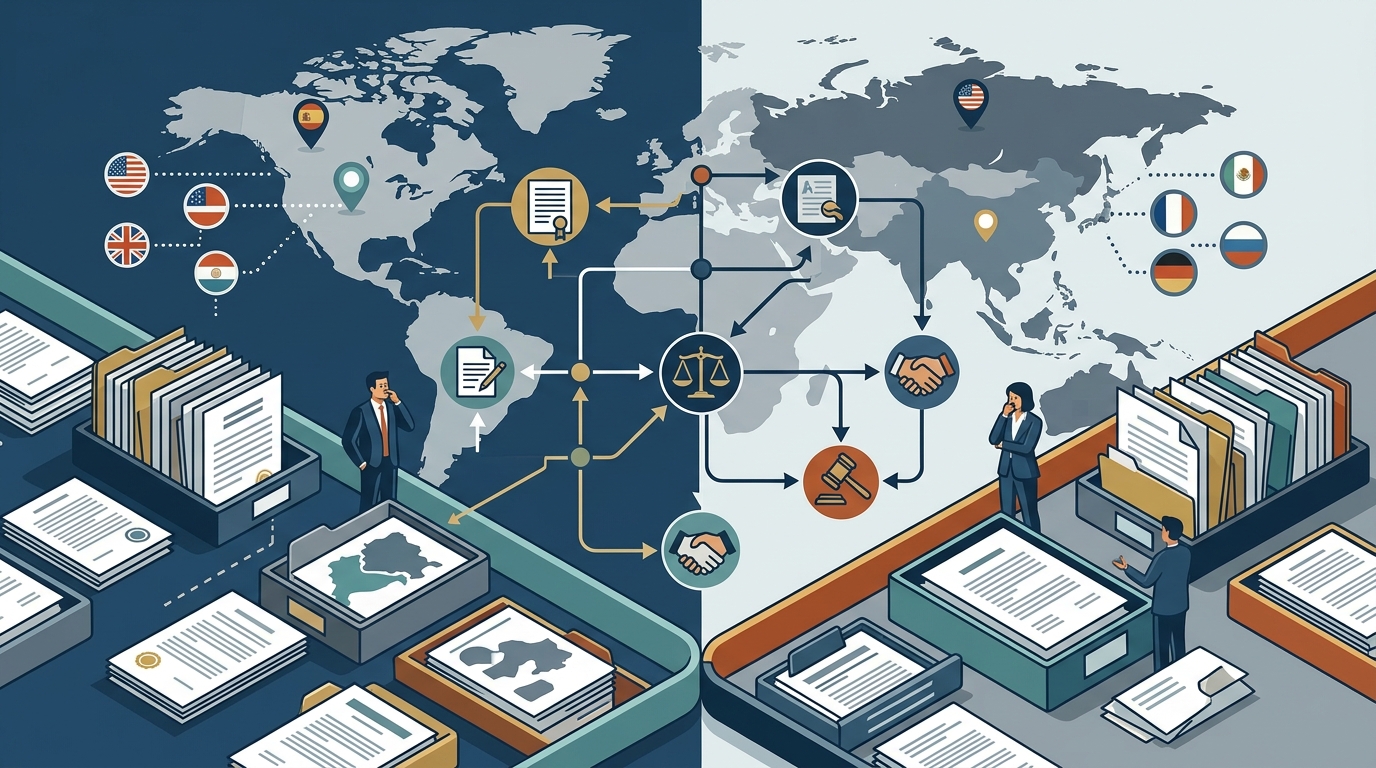
Comparing Resolution Methods
Choosing the right method depends on various factors, including the complexity of the dispute, the parties' relationship, and the need for enforcement. The table below summarizes the key differences between litigation, arbitration, and mediation.
| Method | Binding? | Enforceability | Cost | Confidentiality |
|---|---|---|---|---|
| Litigation | Yes | Variable (Treaty-dependent) | High | No |
| Arbitration | Yes | High (New York Convention) | Medium to High | Yes |
| Mediation | No (unless settled) | Contractual (Settlement Agreement) | Low to Medium | Yes |
For cross-border employment disputes, arbitration is often the preferred method due to its enforceability. However, mediation should always be considered first to preserve relationships and reduce costs. BridgehouseLaw helps clients evaluate these options based on their specific circumstances. We provide strategic advice on corporate law services to align dispute resolution with broader business objectives.
Key Takeaways
- Jurisdiction Matters: Always determine the applicable law and jurisdiction before initiating any dispute resolution process.
- Enforceability is Key: Arbitration awards are generally easier to enforce internationally than court judgments.
- Confidentiality Protects Reputation: Private methods like arbitration and mediation help safeguard sensitive business information.
- Cultural Nuances Impact Negotiation: Understanding cultural differences is vital for successful mediation and negotiation.
- Contract Clauses are Critical: Well-drafted dispute resolution clauses can prevent costly jurisdictional battles.
- Global Expertise is Essential: Navigating cross-border disputes requires knowledge of multiple legal systems.
- Proactive Planning Saves Money: Investing in robust contracts and compliance reduces the likelihood of disputes.
Frequently Asked Questions
What is the most common method for resolving cross-border employment disputes?
Arbitration is increasingly common due to the enforceability of awards under the New York Convention. However, mediation is often used first to preserve business relationships.
Can a foreign court judgment be enforced in another country?
It depends on the existence of bilateral or multilateral treaties between the countries. Without such treaties, enforcement can be difficult and costly.
Does BridgehouseLaw offer services in multiple countries?
Yes, BridgehouseLaw has offices in Atlanta, Charlotte, Berlin, Cologne, Guatemala City, São Paulo, and Vancouver, providing global legal support.
What is the difference between mediation and arbitration?
Mediation is non-binding and facilitated by a neutral third party who helps negotiate a settlement. Arbitration is binding, with the arbitrator making a final decision.
How does BridgehouseLaw assist with international contracts?
We provide contract law services that include drafting and reviewing employment agreements with robust dispute resolution clauses.
What are the costs associated with international arbitration?
Costs vary but typically include arbitrator fees, administrative fees, and legal representation. It is often less expensive than international litigation but can still be significant.
Why is local expertise important in cross-border disputes?
Local laws and procedures vary significantly. Local expertise ensures compliance and effective strategy in each jurisdiction involved.
Contact BridgehouseLaw
Navigating cross-border employment disputes requires expertise in multiple legal systems. BridgehouseLaw provides strategic, results-driven legal solutions tailored to your unique needs. Our global network of offices ensures that you have access to local expertise wherever you operate. Contact us today to schedule a consultation and protect your business interests. Visit our contact page to get started.