

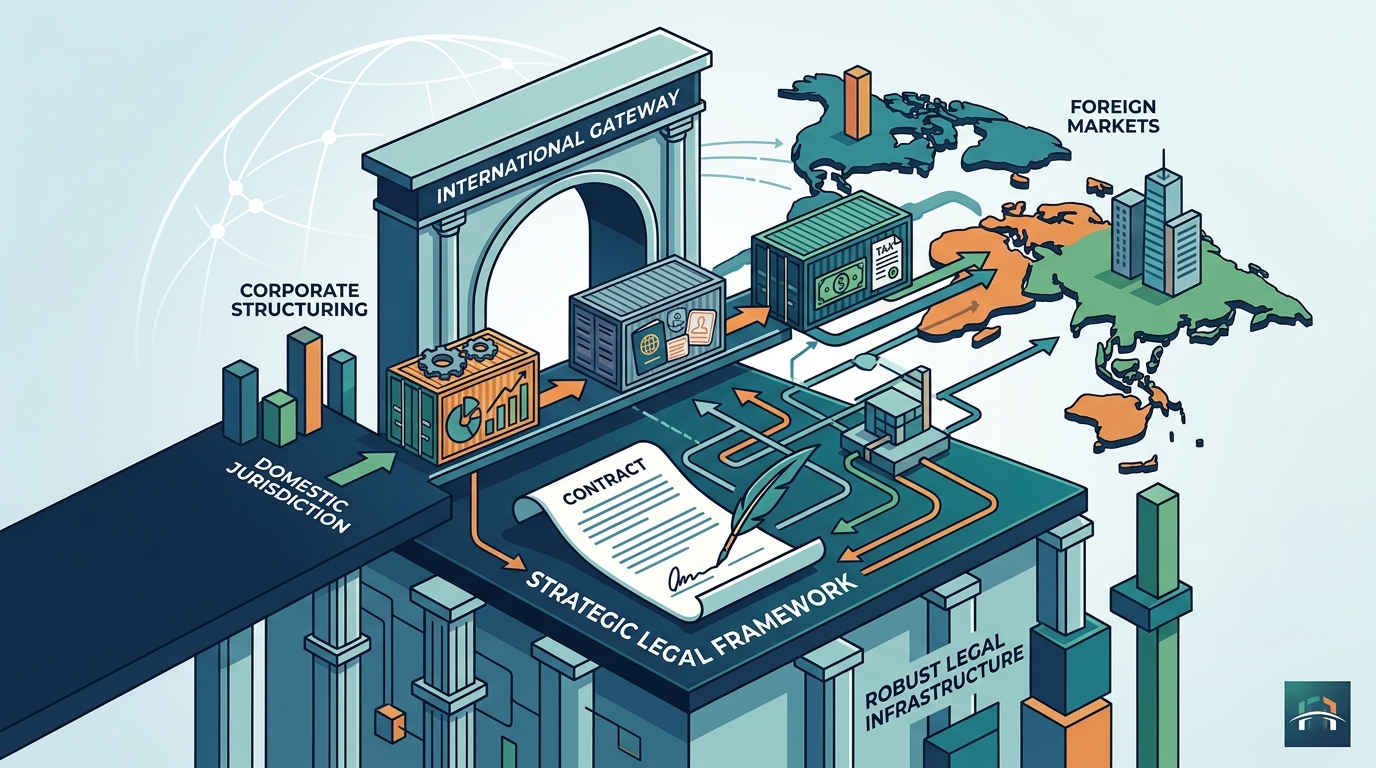
Foreign Direct Investment (FDI) has become the primary engine for global economic growth, with cross-border capital flows reaching record highs in recent fiscal years. According to recent United Nations Conference on Trade and Development reports, global FDI flows have demonstrated significant resilience, highlighting the critical need for robust legal infrastructure to support multinational operations. For enterprises looking to establish a physical presence in new jurisdictions, navigating the intricate web of corporate law, immigration regulations, and tax compliance is not merely an administrative task but a strategic imperative. This guide outlines the essential legal frameworks and operational steps required to successfully execute a cross-border expansion. (About BridgehouseLaw Bridgehouse Law)
Understanding Foreign Direct Investment
Foreign Direct Investment is defined as an investment made by a firm or individual in one country into business interests located in another country. Unlike portfolio investment, which involves passive holdings of securities, FDI implies a lasting interest and significant degree of influence over the management of the enterprise. This distinction is crucial for legal structuring, as it triggers specific regulatory reporting requirements in both the home and host countries. (BridgehouseLaw Business Legal Solutions)
The legal landscape for FDI varies significantly across regions. In the United States, the Committee on Foreign Investment in the United States (CFIUS) reviews transactions for national security implications. In the European Union, member states have their own screening mechanisms for inbound investments. Understanding these regulatory thresholds is the first step in any expansion strategy. BridgehouseLaw provides specialized guidance on navigating these complex international trade laws to ensure seamless market entry. (Blog Bridgehouse Law)
Market Entry Strategies and Entity Formation
Choosing the right legal entity is foundational to a successful expansion. The decision typically rests between establishing a subsidiary, a branch office, or a joint venture. Each structure carries distinct liabilities, tax implications, and governance requirements.
Subsidiary Formation in the United States
For many international businesses, forming a U.S. subsidiary is the preferred route for market entry. This can take the form of a Limited Liability Company (LLC) or a Corporation. An LLC offers flexibility in management and pass-through taxation, while a Corporation provides a more formal structure suitable for raising capital. BridgehouseLaw assists clients with the entire formation process, from drafting articles of incorporation to securing an Employer Identification Number (EIN).
Expansion into Germany and Europe
Expanding into the German market requires adherence to strict corporate governance standards. The typical entity for foreign investors is the Gesellschaft mit beschränkter Haftung (GmbH), which translates to a company with limited liability. Establishing a GmbH involves notarized articles of association, a minimum share capital requirement, and registration in the commercial register. BridgehouseLaw’s Berlin and Cologne offices provide comprehensive support for companies expanding to Germany, ensuring all local statutory requirements are met.
Canadian Market Entry
For businesses targeting North America from a Canadian perspective, the Vancouver office specializes in corporate transactions and secured lending. Establishing a presence in British Columbia involves navigating provincial corporate laws, which differ from federal regulations. Our team helps international investors structure their Canadian entities to optimize for both local compliance and global tax efficiency.
Regulatory Compliance and Corporate Governance
Once an entity is established, ongoing compliance becomes the primary legal focus. This includes annual reporting, tax filings, and adherence to local labor laws. Non-compliance can result in severe penalties, including the revocation of business licenses.
Corporate Hosting and Secretarial Services
Many international firms utilize corporate hosting services to maintain a physical presence without establishing a full office. These services provide a U.S. business address, mail intake, and conference room rentals. BridgehouseLaw offers these secretarial services to ensure that your business maintains a professional image and meets all statutory registered agent requirements.
Contract Law and International Agreements
Contracts in cross-border transactions must account for jurisdictional differences. A contract valid in one country may be unenforceable in another due to differing legal traditions. BridgehouseLaw’s contract law services ensure that your agreements are drafted to withstand scrutiny in multiple jurisdictions. This includes clear clauses on dispute resolution, governing law, and currency exchange.
Immigration and Workforce Integration
Expanding a business often requires relocating key personnel or hiring local talent. Immigration law is a critical component of this process, as visa regulations can delay operations significantly.
U.S. Visa Categories for Business Expansion
Entrepreneurs and executives expanding into the U.S. often utilize the E-2 Treaty Investor Visa or the L-1 Intracompany Transferee Visa. The E-2 visa requires a substantial investment in a U.S. business, while the L-1 visa allows companies to transfer managers and specialized knowledge workers from their foreign offices to the U.S. BridgehouseLaw’s immigration law services guide clients through the complex application processes, ensuring timely approval and compliance.
Canadian Immigration Pathways
For expansion into Canada, skilled professionals and investors can utilize various immigration programs. The Vancouver office specializes in assisting skilled professionals, investors, and families migrating to Canada. Navigating these pathways requires precise documentation and adherence to federal and provincial criteria.
Employment Law and Labor Compliance
Hiring local employees introduces a new layer of legal complexity. Employment laws vary widely regarding termination, benefits, and workplace safety. BridgehouseLaw provides expert employment law services, helping businesses navigate contracts, compliance, and workplace policies. This includes drafting employee handbooks that align with local labor standards and defending against wrongful termination claims.
Protecting Intellectual Property
Intellectual property (IP) is often the most valuable asset of a multinational corporation. Protecting trademarks, copyrights, and patents across borders is essential to prevent infringement and maintain competitive advantage.
Trademark Registration Strategies
Trademark rights are generally territorial. A trademark registered in the U.S. does not automatically protect your brand in Germany or Canada. BridgehouseLaw’s intellectual property attorneys assist with international trademark registration, ensuring your brand is protected in all key markets. This includes conducting thorough clearance searches to avoid conflicts with existing marks.
Copyright and Patent Considerations
While copyright protection is automatic in many countries under international treaties, registration provides additional legal benefits. Patents, however, require individual applications in each jurisdiction. Our team helps clients develop a global IP strategy that aligns with their business expansion timeline and budget.
Key Takeaways
- FDI Requires Strategic Legal Structuring: Foreign Direct Investment involves significant regulatory scrutiny, requiring careful entity selection and compliance planning.
- Entity Choice Impacts Liability and Tax: The decision between an LLC, Corporation, or GmbH affects both personal liability and tax obligations in the host country.
- Immigration is a Critical Path: Visa regulations for business owners and employees can delay market entry; early planning is essential.
- IP Protection is Territorial: Brands and patents must be registered in each jurisdiction where business operations occur.
- Local Compliance is Ongoing: Corporate hosting and secretarial services help maintain statutory compliance without the need for a physical office.
- Contract Law Varies by Jurisdiction: International agreements must be drafted to account for differing legal traditions and enforcement mechanisms.
- BridgehouseLaw Offers Global Support: With offices in Atlanta, Charlotte, Berlin, Cologne, Guatemala City, São Paulo, and Vancouver, we provide comprehensive legal services across multiple jurisdictions.
Frequently Asked Questions
What is the difference between Foreign Direct Investment and portfolio investment?
Foreign Direct Investment involves establishing a lasting interest and significant influence over a business in another country, whereas portfolio investment is a passive holding of securities without management control.
How does BridgehouseLaw assist with U.S. market entry?
We provide expert guidance on company setup, immigration support, trademark registration, and HR compliance to ensure a seamless U.S. market entry for international businesses.
What are the requirements for forming a GmbH in Germany?
Forming a GmbH requires notarized articles of association, a minimum share capital, and registration in the local commercial register. Our Berlin and Cologne offices handle these steps for you.
Can BridgehouseLaw help with immigration for business expansion?
Yes, our immigration law services assist with visa applications for entrepreneurs, executives, and skilled workers migrating to the U.S., Canada, and other jurisdictions.
Why is intellectual property protection important in cross-border expansion?
IP rights are territorial. Protecting your trademarks and patents in each new market prevents infringement and safeguards your brand’s value globally.
What corporate hosting services are available for foreign businesses?
Services include a U.S. business address, mail intake, conference room rentals, U.S. telephone numbers, and administrative support to maintain a professional presence.
How do I handle employment law compliance in a new country?
We help businesses navigate local labor laws, draft compliant employment contracts, and establish workplace policies that adhere to regional regulations.
Start Your Global Expansion Today
Expanding your business across borders is a complex endeavor that requires precise legal planning and execution. Whether you are entering the U.S. market, establishing a presence in Germany, or navigating Canadian regulations, BridgehouseLaw provides the expertise you need. Our multilingual legal team is ready to help you navigate cross-border legal matters, market entry, compliance, and business expansion. Contact our office today to schedule a consultation and secure your global future.