

Mandatory Worker Protections in International Employment Disputes
Statutory Rights That Cannot Be Waived
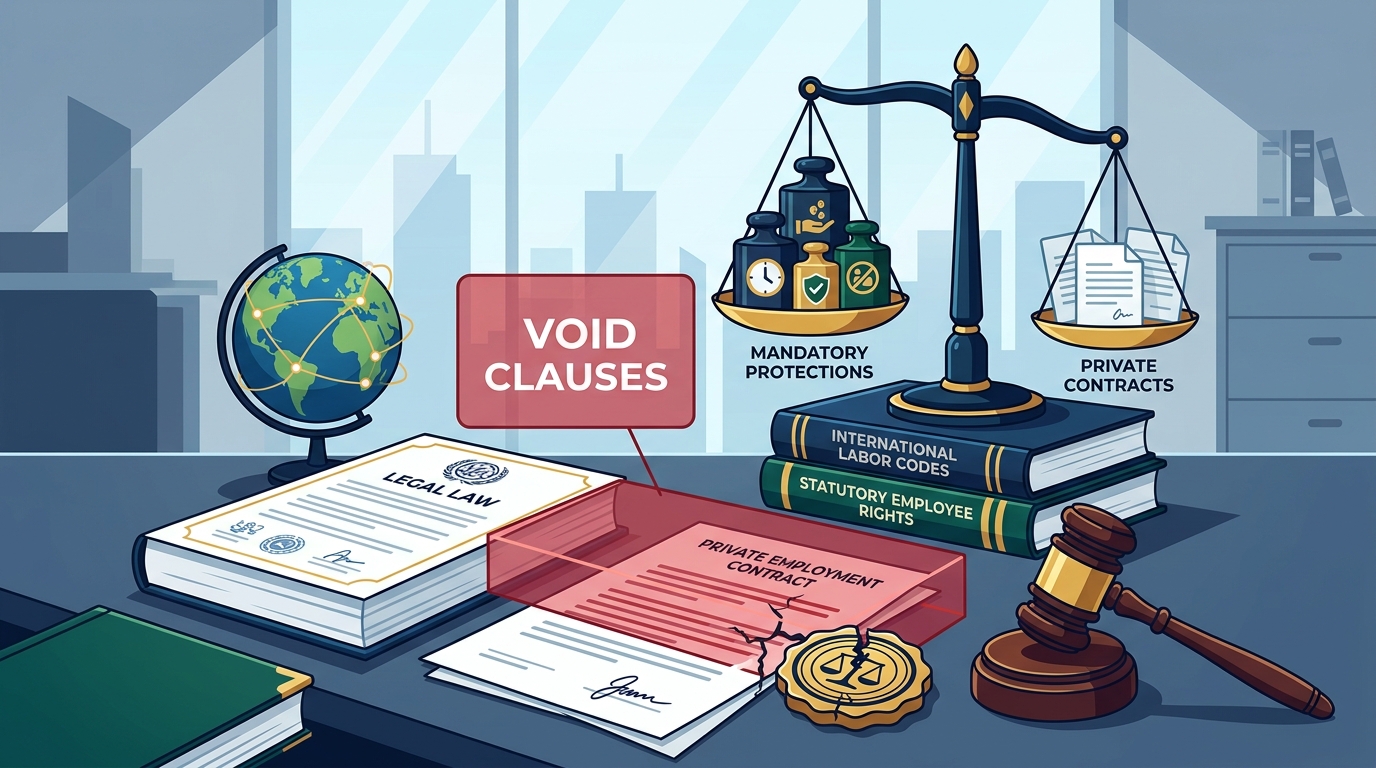
Many employers assume that a signed employment contract overrides local labor laws. This is a dangerous misconception. Mandatory worker protections are legal requirements that apply regardless of what is written in a private agreement. If a contract violates these statutory minimums, the contract clause is often void, and the employer remains liable for the statutory standard. For additional details, review the .
For example, in the United States, the Fair Labor Standards Act (FLSA) sets federal minimum wage and overtime rules. In Germany, the Mindestlohngesetz (Minimum Wage Act) enforces a national minimum wage. If you hire an employee in Berlin, you must comply with German minimum wage laws, even if your contract states a lower rate. Attempting to bypass these rules can result in fines, back-pay orders, and reputational damage.
Employers must understand that statutory rights are the floor, not the ceiling. You can offer better terms, but you cannot offer worse. This distinction is critical when drafting international employment agreements. A contract that appears favorable to the employer may actually be unenforceable in the employee's home jurisdiction. For additional details, review the Customer Experience.
Jurisdictional Variance in Labor Standards
Labor laws vary significantly across borders. What is considered a standard termination procedure in one country may be illegal in another. For instance, in France, employees have strong protections against unfair dismissal, and severance pay is often mandatory. In contrast, some U.S. states operate under "at-will" employment, where either party can end the relationship without cause, subject to anti-discrimination laws.
Consider a scenario where a U.S. company terminates an employee in São Paulo, Brazil. Brazilian labor law (CLT) provides extensive protections, including mandatory severance, notice periods, and restrictions on termination during certain periods. If the U.S. company applies its domestic "at-will" logic, it may face significant legal penalties in Brazil. This highlights the need for jurisdiction-specific legal advice.
Jurisdictional variance means that a one-size-fits-all approach to employment contracts is ineffective. Each country has its own labor code, court system, and enforcement mechanisms. Employers must tailor their policies and contracts to the specific legal environment of each location where they have employees.
Anti-Discrimination and Equal Pay Obligations
Anti-discrimination laws are a core component of mandatory worker protections. These laws prohibit employment decisions based on race, gender, age, religion, disability, or other protected characteristics. In the European Union, the principle of equal treatment is enshrined in various directives and national laws. In the U.S., Title VII of the Civil Rights Act and the Americans with Disabilities Act (ADA) provide similar protections.
Equal pay for equal work is another critical protection. The EU Pay Transparency Directive, for example, requires employers to disclose pay structures and ensure that gender pay gaps are addressed. If an employer pays a male employee in London more than a female employee in the same role for no objective reason, they may be liable for discrimination claims. This risk extends to international employers who manage teams across multiple countries.
Employers must ensure that their compensation structures and promotion criteria are objective and non-discriminatory. Equal pay obligations require regular audits of pay data to identify and correct disparities. Failure to do so can lead to class-action lawsuits and regulatory investigations.
Workplace Safety and Health Requirements
Workplace safety is a non-negotiable legal obligation in most jurisdictions. Employers are required to provide a safe working environment, free from recognized hazards that could cause death or serious physical harm. In the U.S., the Occupational Safety and Health Administration (OSHA) enforces these standards. In Germany, the Arbeitsschutzgesetz (Occupational Safety and Health Act) imposes similar duties.
For remote or hybrid workers, safety obligations extend to the home office. Employers may be required to assess the safety of remote workspaces and provide guidance on ergonomics and electrical safety. If an employee is injured in a home office due to a lack of employer-provided safety equipment, the employer may be held liable. This is a growing area of legal risk for global companies.
Building a Compliance Strategy for Global Teams
Managing mandatory worker protections across multiple jurisdictions requires a structured compliance strategy. Employers should start by mapping out the labor laws in each country where they have employees. This includes identifying key statutory rights, such as minimum wage, working hours, leave entitlements, and termination procedures.
Next, employers should review their employment contracts and policies to ensure they comply with local laws. This may involve localizing contracts for each jurisdiction. For example, a German contract will differ significantly from a Canadian contract in terms of notice periods and severance. Employers should also establish clear channels for employees to report concerns and seek legal advice.
Partnering with local legal experts is essential. Compliance strategy involves ongoing monitoring of legal changes and regular training for HR teams. By staying informed and proactive, employers can mitigate legal risks and build a positive employer brand. BridgehouseLaw provides the expertise needed to navigate these complex requirements, ensuring that your global workforce is protected and your business is compliant.
Key Takeaways
- Mandatory worker protections are statutory rights that cannot be waived by employment contracts.
- Jurisdictional variance means labor laws differ significantly across countries, requiring localized compliance.
- Anti-discrimination and equal pay laws are core protections that apply in most jurisdictions.
- Workplace safety obligations extend to remote and hybrid work environments.
- A structured compliance strategy, including local legal advice, is essential for global employers.
- Ignoring mandatory protections can result in fines, back-pay orders, and reputational damage.
Frequently Asked Questions
Can I waive mandatory worker protections in an employment contract?
No. Mandatory worker protections are statutory rights that cannot be waived by private agreement. If a contract violates these laws, the clause is typically void, and the employer remains liable for the statutory standard.
Do labor laws apply to remote employees working from home?
Yes. In many jurisdictions, employers are required to ensure the safety of remote workspaces. This may include providing guidance on ergonomics and electrical safety. Failure to do so can result in liability if an employee is injured.
What happens if my contract violates local minimum wage laws?
If your contract pays less than the local minimum wage, the contract clause is likely void. You may be required to pay the difference, plus potential penalties. It is essential to ensure that all compensation meets or exceeds local statutory minimums.
How do anti-discrimination laws affect international hiring?
Anti-discrimination laws prohibit employment decisions based on protected characteristics. Employers must ensure that their hiring, promotion, and compensation practices are objective and non-discriminatory, regardless of the employee's location.
What is the role of local legal counsel in compliance?
Local legal counsel provides expertise on jurisdiction-specific labor laws. They can help draft compliant contracts, advise on termination procedures, and ensure that your policies meet local statutory requirements. This is critical for mitigating legal risks in global operations.
How often should I review my employment contracts for compliance?
You should review your contracts regularly, especially when labor laws change. Annual reviews are recommended, but more frequent reviews may be necessary in jurisdictions with frequent legal updates. Partnering with local legal experts can help ensure ongoing compliance.
Conclusion
Navigating mandatory worker protections in international employment disputes requires a deep understanding of local labor laws. These protections are non-negotiable and vary significantly across jurisdictions. By implementing a robust compliance strategy and partnering with experienced legal counsel, employers can mitigate risks and ensure that their global workforce is treated fairly. BridgehouseLaw offers the expertise needed to guide your business through these complex legal landscapes, ensuring compliance and protecting your interests.